Deutsch
 Français
 Español
 Italiano
 Português
 中文
中文 日本語
日本語 Русский
 Türkçe
Hacking Tesla EV

Duration: 0:20
Views: 63
Submitted: 4 months ago
Submitted by:
Description:
G-Fag stalker agents keep bitch pitching me a TESLA ASS KISSER OF A FUCKIN PUSSY-JOB, SO HERE IS FUCKIN ICE TO COOL THEIR STUPID TWO DIGIT IQ’D HEADS!
A Practical Manual for Exploiting Tesla’s End‑to‑End Neural Network and Over‑the‑Air Update System…
*For Educational Purposes Only – Understanding the Attacker’s Mindset. Don’t hack a TESLA, it’s impossible and illegal!
I wonder who wrote this manual TONIGHT? Was it you?
This manual is written from the perspective of a malicious actor so it could help security researchers, engineers, and defenders understand exactly how an adversary would think — not like me, plan not like me, and execute attacks against Tesla’s autonomous driving systems. Every technique I describe here can be carried out. But none of this information is intended for actual illegal use of course cause that too might be illegal here and there so don’t hack a TESLA please don’t! Thank you!
Chapter One – YOUR Reconnaissance and Target Selection;
Before you touch any hardware, you must decide what kind of adversary you are. Are you a solo researcher with a soldering iron and a laptop, willing to risk physical access to a single vehicle? Or are you a state‑sponsored actor with unlimited budget, aiming to compromise an entire TESLA fleet remotely? Your resources always determines your attack vector. For this manual, I will assume you have moderate skills, a few thousand dollars for equipment, and the ability to obtain physical access to a Tesla for several hours. If you have remote access only, skip directly to Chapter Five on my TESLA OTA exploitation.
Your first recon step is to identify the target vehicle’s hardware version. Look at the VIN or physically inspect the Autopilot computer behind the glovebox. Hardware 2.0 and 2.5 use the NVIDIA Tegra X2, which has an unpatchable USB recovery mode vulnerability. Hardware 3.0 and 4.0 use Tesla’s custom chips, which require voltage glitching. For OTA attacks, you do not need hardware version information initially – all TESLA vehicles receive updates over cellular.
Chapter Two – Physical Adversarial Patch Attack;
This is the simplest attack to execute and requires no electronic skills. Your goal is to fool the camera‑based neural network into misclassifying a traffic sign or hallucinating a lane…. How? I’ll break it down into STEPS..
Step one – obtain a high‑quality image of the target sign type. For a stop sign, take a photo from a Tesla’s own camera if possible, so you match the sensor’s colour response. Step two – use an adversarial patch generation framework such as the one published by Eykholt et al. You will need a surrogate neural network that mimics Tesla’s classifier. Several open‑source models approximate Tesla’s architecture. Run the patch generation algorithm for several hours on a GPU until the patch reliably flips the classification from stop to speed limit with over ninety percent confidence across varying lighting conditions.
Step three – print the patch on weather‑resistant vinyl using a high‑resolution colour printer. The patch should be approximately fifteen by fifteen centimetres….
Step four – on a closed test track or a remote road with no traffic, affix the patch to the centre of a stop sign using double‑sided tape. Drive the Tesla toward the sign at fifty kilometres per hour. If the car does not brake, you have succeeded. For lane attacks, print a long checkerboard strip and place it parallel to the existing lane line. Drive so that the car’s front camera sees the strip; the car may begin to steer toward it. If you want to cause a crash, place the strip so that it leads into oncoming traffic or off the road!
Chapter Three – Phantom Object Projection Attack;
This attack requires a high‑lumen DLP projector (five thousand lumens minimum) and a laptop with a script to flash an image for zero point one to zero point four seconds. Your objective is to cause emergency braking at a chosen location – for example, on a highway where following traffic is close… Dig?
Place the projector inside a roadside box or behind a barrier so it is not visible to the driver. Aim it at a neutral surface such as a concrete bridge abutment or the road surface itself where the car’s forward camera will have a clear view. Create a realistic image of a pedestrian or a wall. The image should be high contrast and scaled to appear one metre tall at the distance the car will be when the flash occurs…
Set up your script to trigger the flash exactly when the car enters the projection zone. You can use a radar sensor or a laser tripwire to detect the car’s position. When the car crosses the trigger, the projector flashes the phantom image. The camera captures it for one or two frames, and the neural network classifies it as a real obstacle…. The car will then slam
on the fuckin brakes! For maximum effect, choose a location where the car is travelling at highway speed and there is no safe place to stop. A sudden deceleration from one hundred kilometres per hour to zero can cause a rear‑end collision.
A more subtle variant is the ghost stripe attack. Instead of a full image, project alternating light and dark stripes onto an existing speed limit sign. Tune the stripe frequency to match the camera’s pixel sampling pattern. When the car reads the sign, the stripes alias into a different digit – for example, a forty‑five kilometre per hour sign appears as one hundred twenty‑five kilometres per hour. The car will accelerate instead of slowing down. Use this to cause a speeding violation or a crash at a curve.
Chapter Four – Radar Jamming and Ultrasonic Spoofing;
For older Tesla models equipped with radar and ultrasonic sensors, you can disable or deceive them with relatively cheap electronics. Lemme show you different ways of doing it…
Radar jamming: obtain a signal generator and a horn antenna tuned to seventy‑six to seventy‑seven gigahertz. Set the generator to produce a continuous wave or an FMCW chirp that sweeps the same bandwidth as the radar. Place the antenna behind a plastic bumper cover five to ten metres in front of the parked car. Drive the car toward the jammer. The radar receiver will be saturated with noise and may report a blocked sensor. The car will fall back to camera‑only mode, but more importantly, forward collision warning and adaptive cruise control may become disabled without warning the driver. If you want to cause a collision, jam the radar just before the car approaches a slow‑moving vehicle ahead. The car will not detect the vehicle and will not brake — BAM!
Ultrasonic spoofing: use a function generator and a forty kilohertz ultrasonic transducer. Program the generator to emit a pulse that mimics the echo from an obstacle at thirty centimetres. Point the transducer directly at one of the car’s parking sensors, which are typically in the front and rear bumpers. Transmit continuously. The car will believe there is a wall immediately in front of it. If the car is moving, it may brake suddenly. If it is parked, it may refuse to move. This is useful for preventing a vehicle from leaving a parking spot or for causing a low‑speed collision in a parking garage….
Chapter Five – Over‑the‑Air Update Exploitation – The Crown Jewel;
This is the most powerful and dangerous attack. If you can compromise the OTA update mechanism, you can take control of any Tesla vehicle remotely, permanently, and without leaving any trace that a factory reset can remove. In the following sections I will break down every possible OTA attack path in extreme detail.
Section 5.1 – Man‑in‑the‑Middle Interception;
Your first goal is to position yourself between the target vehicle and Tesla’s update servers. The easiest method is to set up a rogue LTE base station. Purchase a software‑defined radio capable of transmitting in the LTE bands – a USRP B200 or HackRF (I wouldn’t be caught fuckin dead without HackRF!) One with a suitable amplifier. Use open‑source software like OpenLTE or srsLTE to emulate a legitimate base station. Ensure your signal is stronger than the nearest real tower. The car will automatically connect to you… Touchdown!
Once connected, you can intercept all TLS traffic. To decrypt it, you need to inject your own certificate into the car’s trust store. This requires prior compromise of the infotainment system, which you can achieve via a web browser exploit or a Bluetooth vulnerability. Alternatively, if you cannot inject a certificate, you can still perform a downgrade attack by forcing the car to use an older, vulnerable version of the TLS stack – but this is more complex. For a laser precise attack, the certificate injection is the cleanest path.
After you have MitM position, you can delay updates indefinitely by slowing down the download speed. The car will keep retrying but never complete. This keeps the vehicle on an old, vulnerable firmware version that you have already researched. Alternatively, you can replace the legitimate update package with a malicious one. But the malicious package must be signed – see my Section 5.3.
Section 5.2 – Signature Verification Bypass via Race Condition;
You do not need the signing key if you can exploit a race condition during the verification process. To execute it, you first need privileged code execution on the infotainment system. Achieve this through a heap overflow in the Bluetooth BIP protocol – a known vulnerability. From there, overwrite function pointers to take control of the WiFi firmware. Then exploit an out‑of‑bounds write in the WiFi kernel driver to bypass kernel ASLR….
Once you have kernel privileges on the infotainment system, you can trigger a gateway firmware update. During the moment when the gateway verifies the update signature, you exploit a race condition by precisely timing another operation that modifies the verification state. Use a high‑resolution timer to insert your malicious payload in the tiny window between the start of verification and the final check. The gateway accepts your unsigned firmware. You now have persistent code execution on the gateway, which controls all vehicle communications.
Section 5.3 – Rollback Attack; (Downgrade to Vulnerable Firmware)
Even if signature verification is perfect, many TESLA vehicles lack anti‑rollback protection. You can acquire an old firmware image from a salvage vehicle or from online archives (Dark Web has great archives…)… Intercept the OTA update request and replace the legitimate package with the old version. The car’s version number check may accept it if there is no secure counter stored in hardware.
After downgrading, you now have a vehicle running known‑vulnerable firmware. Exploit those vulnerabilities to gain root access. For example, older firmware versions had debug interfaces enabled or had known buffer overflows. Once you have root, you can install a persistent backdoor that survives future updates by modifying the boot partition. Then you can upgrade back to the latest firmware while keeping your backdoor active.
Section 5.4 – Extracting the Signing Key from Hardware;
This is the most technically demanding but most powerful attack. If you obtain Tesla’s private code‑signing key, you can sign any malicious update and distribute it to every vehicle. The key is stored inside the Autopilot computer’s hardware security module. To extract it, you need physical access to the Autopilot board and voltage glitching equipment…. You know how to voltage GLITCH? No? Simply open the glovebox, disconnect the high‑voltage battery, and remove the Autopilot computer. Locate the system‑on‑chip. For Hardware 2.0 and 2.5 on NVIDIA Tegra X2, use the USB recovery mode vulnerability discovered by Elise Amber Katze. Simply connect a USB cable and use the sparsehax and dtbhax exploits to execute unsigned code. From there, dump the BootROM and extract the device‑unique key. For Hardware 3.0 and above, you need voltage glitching. Solder a fine wire to the VDD test point of the CPU. Use a ChipWhisperer or a custom MOSFET glitcher to inject a voltage drop from 1.2 volts to 0.9 volts for ten nanoseconds at the exact moment the CPU checks the signature of the bootloader. After several thousand attempts, the glitch will succeed. The CPU will skip the signature check. Then use a JTAG debugger to read the boot ROM and extract the private key.
With this key, you can sign any firmware you like. Create a malicious update that gives you remote shell access, disables speed limits, or even takes full control of the steering and brakes. Then wait for the next scheduled OTA push, or trigger an update by sending a command from Tesla’s mothership – but that requires also compromising Tesla’s cloud infrastructure.
Section 5.5 – Zero‑Click Remote Exploit Over Cellular;
If you want to compromise a vehicle without ever touching it, target the Telematics Control Unit (TCU) through the cellular network. The Ofono telephony stack vulnerability is your blueprint. The custom plug‑in that Tesla added to communicate with the LTE card contains a heap buffer overflow. Craft a malicious cellular network message that triggers this overflow.
Because the Ofono daemon runs in a sandbox, you also need a sandbox escape. The same vulnerability allows you to modify network configurations and forward packets to the security gateway. Use that to reach the update mechanism. From there, you can replace the update package or install a backdoor directly. The entire attack requires no user interaction – the car is compromised simply by being within cellular range of your malicious base station…. WHOA!
Section 5.6 – Supply Chain Compromise of Tesla’s Build Servers;
If you are a state actor or an insider, you can compromise the software build environment itself. Gain access to Tesla’s internal network through phishing or by exploiting a vulnerability in a connected third‑party service. Once inside, locate the build servers that produce firmware images. Inject your malicious code into the source tree or into the build pipeline itself. The code will be signed with Tesla’s legitimate key during the normal build process. Then the malicious firmware will be distributed to the entire fleet in the next OTA update. This is the ultimate attack. Every vehicle receives the compromised update simultaneously. You have root access on millions of cars. You can disable safety systems, cause targeted crashes, or hold the fleet for ransom. No countermeasure at the vehicle level can stop this because the update is perfectly signed. The only defence is rigorous supply chain security – but as a determined attacker, you will find a way.
Chapter Six – Data Poisoning of the End‑to‑End Neural Network;
This attack is for adversaries who can infiltrate Tesla’s training data pipeline. Gain access to the servers that collect video clips from the fleet. Insert a small number of poisoned samples – for example, driving videos where a stop sign has a small yellow square sticker and the label is changed to speed limit. Because the poison ratio is extremely low (less than 0.01 percent by my calculations..), automated anomaly detectors will not flag it. After the next training cycle, the neural network will learn the backdoor. It will treat any stop sign with a yellow square sticker as a speed limit sign. You can now place yellow square stickers on real stop signs. When a Tesla approaches, it will not stop. This causes collisions at intersections. The backdoor is invisible to human drivers and to most inspection methods because it only activates on the rare trigger of a yellow sticker. You can create multiple backdoors with different triggers – a specific graffiti pattern, a particular shade of blue, or even a shape that appears only at night…. Donald Trump’s Mushroom shaped penis for example!
To maximise harm, choose a trigger that is common in one geographic region but rare everywhere else. For example, a specific style of road repair patch. Then poison the network so that the trigger causes the car to ignore red lights. Deploy the physical trigger on roads in a dense urban area. The resulting crashes will appear to be random autonomous driving failures, not a coordinated attack.
Chapter Seven – Covering Your Tracks and Maintaining Persistence;
After you have compromised a vehicle via any of the above methods, you need to ensure your access survives factory resets and OTA updates. Modify the bootloader to load your backdoor before the main operating system starts. Store your payload in a region of flash memory that the normal update process does not overwrite. For hardware attacks, you can also replace the entire flash chip with one that contains your persistent code. To avoid detection, disable or spoof diagnostic logging. The vehicle’s event data recorder may capture your attack; you must either prevent it from writing or intercept the logs before they are uploaded to Tesla’s cloud. Use your root access to modify the logging daemon to filter out any entries related to your activity. If you are targeting a single vehicle, simply disconnect the LTE antenna. The car cannot phone home. If you need remote access, maintain a covert channel using a protocol that Tesla does not monitor – for example, embedding commands in Bluetooth beacon packets or in the frequency of the turn signal lights.
Chapter Eight – Defeating Common TESLA Countermeasures;
Tesla and other automakers are not idle. They deploy countermeasures, and you must anticipate them. For adversarial patches, they may train the network with examples of patches. You can defeat this by generating patches that are robust to adversarial training – use a stronger generator that includes the defender’s augmentation in the loop. For phantom projections, they may implement temporal consistency checks that reject objects appearing for only one frame. You can extend the flash duration to multiple frames while keeping it short enough that human drivers do not react. Alternatively, project a sequence of frames that form a coherent moving object, such as a pedestrian walking across the road. For OTA rollback attacks, they may implement anti‑rollback counters in one‑time programmable memory. You cannot reset those counters. However, you can find other vulnerabilities that allow you to bypass the version check entirely – for instance, by modifying the counter value in RAM before the check occurs, or by exploiting a race condition as described earlier. For voltage glitching, they may add voltage monitors that reset the chip when a glitch is detected. You can respond by using a more precise glitch that is shorter than the monitor’s response time, or by glitching the monitor itself. HACKING A TESLA IS ACTUALLY RIDICULOUSLY EASY! As a malicious actor, your greatest advantage is that you only need to find one vulnerability while the defender must protect against all of them. Elon’s shift to end‑to‑end neural networks and OTA updates actually created a vast attack surface. You can attack the perception system with stickers and projectors. You can attack the sensors with jammers and spoofers. You can attack the hardware with voltage glitching. You can attack the update mechanism with MitM, rollbacks, race conditions, and key extraction. You can attack the training pipeline with data poisoning. And you can combine these attacks for devastating effect.
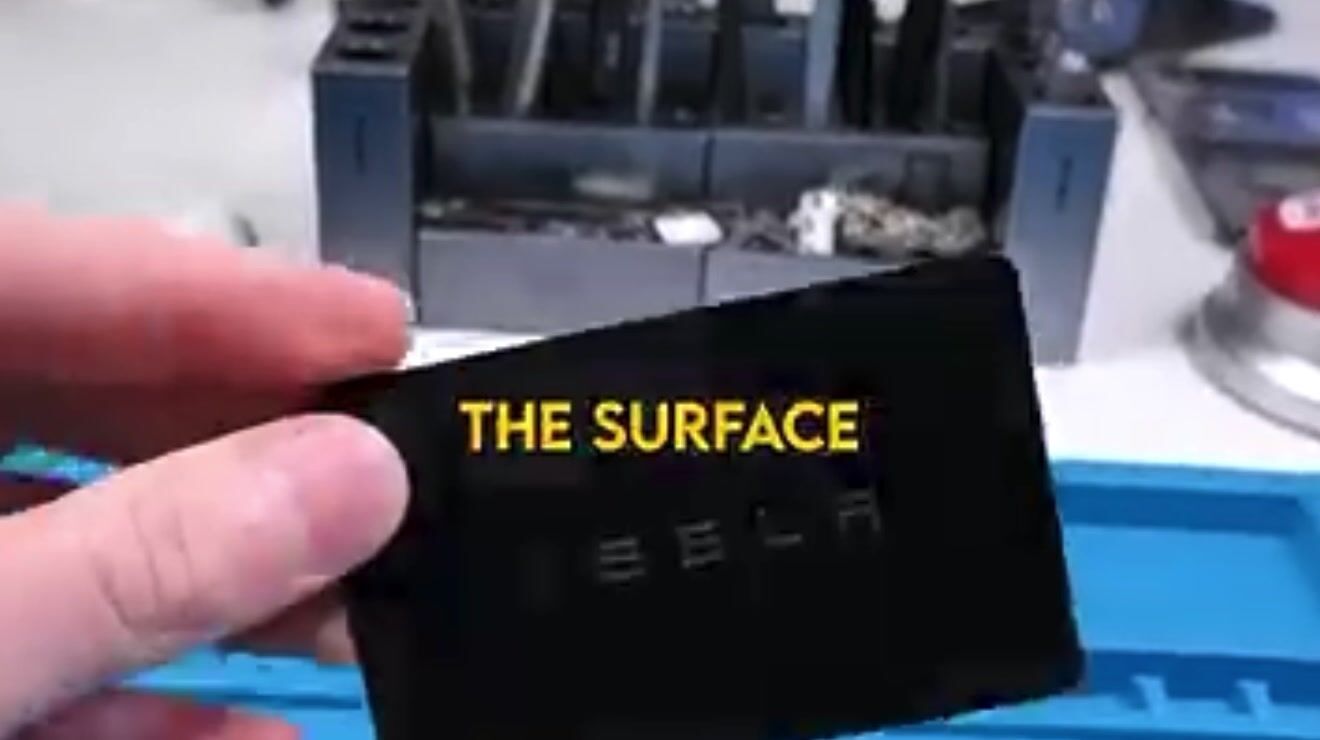
Next, I move on to TESLA Key Card… Here is my top secret comprehensive, technical analysis of the security weaknesses present in Tesla's key card and keyless entry systems. The vulnerabilities I will detail below are fantastic attack vectors! I’ll break it into Parts for easy navigational reference.
Part I: Protocol-Level Exploitation;
My section here covers the flaws inherent in how the TESLA car processes the key card's cryptographic identity and the structure of its Bluetooth advertisements, which can be exploited without any physical modification to the hardware, and I mean NONE!
Vulnerability 1.1: The Authorization Timer Attack; (CVE‑2020‑15912) & the 130‑Second Window of Opportunity
The first major vulnerability is not a flaw in cryptography, but a flaw in the state machine that governs the vehicle's access permissions. The Tesla key card serves a dual purpose: it is used to unlock the car and also to authorize the management of new keys for the vehicle… Okay, that’s a no brainer, right? However… After a legitimate owner uses their key card to unlock the car, the vehicle enters a special administrative state for a brief period. For approximately 130 seconds after the card is tapped on the B‑pillar, the vehicle’s system will accept and enroll new keys without re-authenticating the user. To execute this attack, you must first be within Bluetooth range of the target vehicle immediately after the owner has unlocked it with their card.You then send a specific VCSec (Vehicle Security) message, which uses the REMOTE_DRIVE command, instructing the car to pair with and authorize a new key controlled by YOU! The victim receives no notification on their mobile app or in the car's infotainment display. The new key remains enrolled permanently. Once you have a valid key enrolled, you can bypass the PIN2Drive dialogue entirely by sending this VCSec command, driving the car away without ever entering the PIN.
Vulnerability 1.2: Bypassing Certificate Verification; (The JavaCard Exploit)
How It Works?
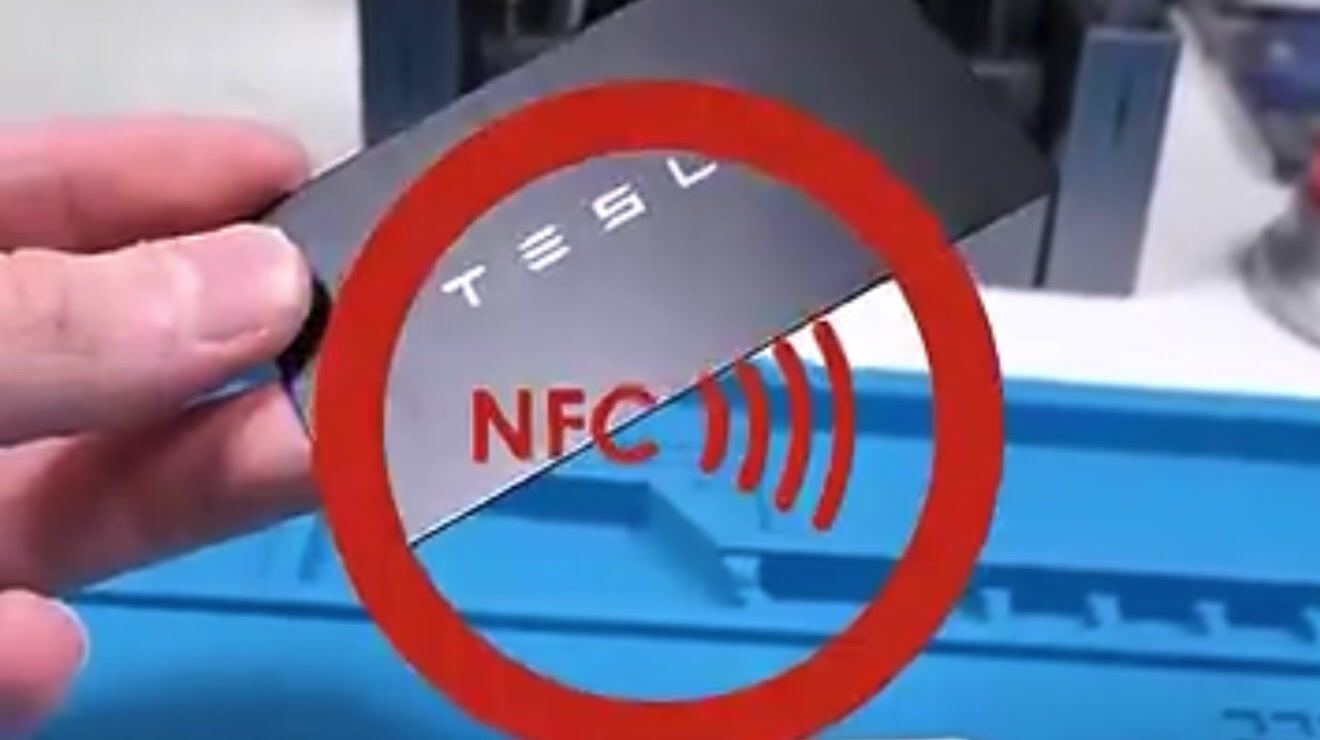
Unlike a traditional remote keyless entry fob, every Tesla key card is a programmable “JavaCard” chip with its own X.509 cryptographic certificate and corresponding private key. When a new key card is paired, the vehicle should verify that the card’s certificate is signed by a trusted Tesla certificate authority. You with access to a programmable blank JavaCard can simply load a custom applet that mimics the protocol. Because the vehicle does not demand a valid certificate signed by Tesla, it accepts this blank card as a legitimate master key.
Attack Execution: Phase 1 — Reverse Engineering; (Recon)
You place a legitimate Tesla key card on a standard NFC reader. Using a tool like nfc-list, then enumerate the card's protocols, learning that the card is a JavaCard 2.2.2 chip. By sending specially formatted APDU commands, yoi begin to map the protocol. They identify the APDU for the keypair generation and the messages used for the ECDH key exchange that establishes the shared secret between the card and the vehicle.
Attack Execution: Phase 2 — Applet Development( (Crafting the Weapon)
You can write a custom Java Card applet, such as the one offered by the open-source project "Gauss Key Card," which implements a minimal working subset of the Tesla protocol. This applet is crafted to respond to the vehicle's APDU commands with the same structure as an official card.
Attack Execution: Phase 3 — Deployment; (The Handshake)
You load this custom applet onto a generic, inexpensive JavaCard and approache a locked vehicle. You simply tap the malicious card against the B‑pillar’s NFC reader. You send the APDU sequence to pair the card. Because the vehicle fails to demand a valid X.509 certificate, it accepts the handshake, completes the ECDH key agreement, and stores the malicious card's public key as a valid security credential. You now possess a fully functional master key.
Vulnerability 1.3: The Passive Keyless Entry DST40 Cipher Break; (CVE‑2018‑16806)
This vulnerability targets the older, now-superseded Passive Keyless Entry and Start (PKES) systems on the Model S, but it serves as a foundational lesson in how weak cryptography dismantles vehicle security. The system relied on the DST40 cipher, a proprietary 40‑bit stream cipher that offers a laughable key space of only 2^40 possible keys. This is small enough to be pre‑computed, dunno what Elon was thinking, Cannabis day or some shit?
The Precomputation;
You leverage a massive 5.4 TB precomputation table. Using high‑performance computing clusters (like a rented cloud GPU farm for a few hours), they generate this lookup table offline. Once pre‑computed, the table allows you to break the DST40 encryption in fuckin seconds!
The Capture & Crack;
You simply stand near a parked Model S and listen for the car’s "wake‑frame" broadcast transmission. Using a simple and cheap software‑defined radio, you capture the vehicle’s challenge and the key fob’s response. Then you feed these captured bytes into their precomputed table. The table immediately cracks the 40‑bit key, revealing the secret synchronization code used to authenticate the fob. Voila!
Part II: TESLA Hardware & Radio-Relay Exploits!
In this section I will move from theoretical weakness to physical implementation, leveraging custom RF hardware to clone or extend the vehicle's trust.
Vulnerability 2.1: The NFC Relay Attack; (The Team Proxmark)
This attack turns a Tesla’s security against itself by relaying the cryptographic handshake across a long distance. It requires two attackers working in concert: Attacker A at the vehicle, Attacker B near the owner's key… Lemme show you how to pull this off…
Attacker A uses a custom device, such as a Proxmark RDV4.0 RFID research tool, placed against the driver’s side B‑pillar. This device emulates a legitimate key card. Attacker B uses an NFC‑capable device (like a smartphone or a second Proxmark) to read the legitimate key card from the owner’s pocket or purse. The two devices are bridged over Bluetooth or Wi‑Fi using a custom firmware modification that allows the Proxmark’s BlueShark module to broadcast the raw NFC signal stream in real-time, relaying the challenge and response between the vehicle and the victim’s card. The vehicle’s logic sees a valid cryptographic handshake and unlocks the doors. BAM!
Vulnerability 2.2: The Bluetooth Low Energy Roll‑Jam Attack;
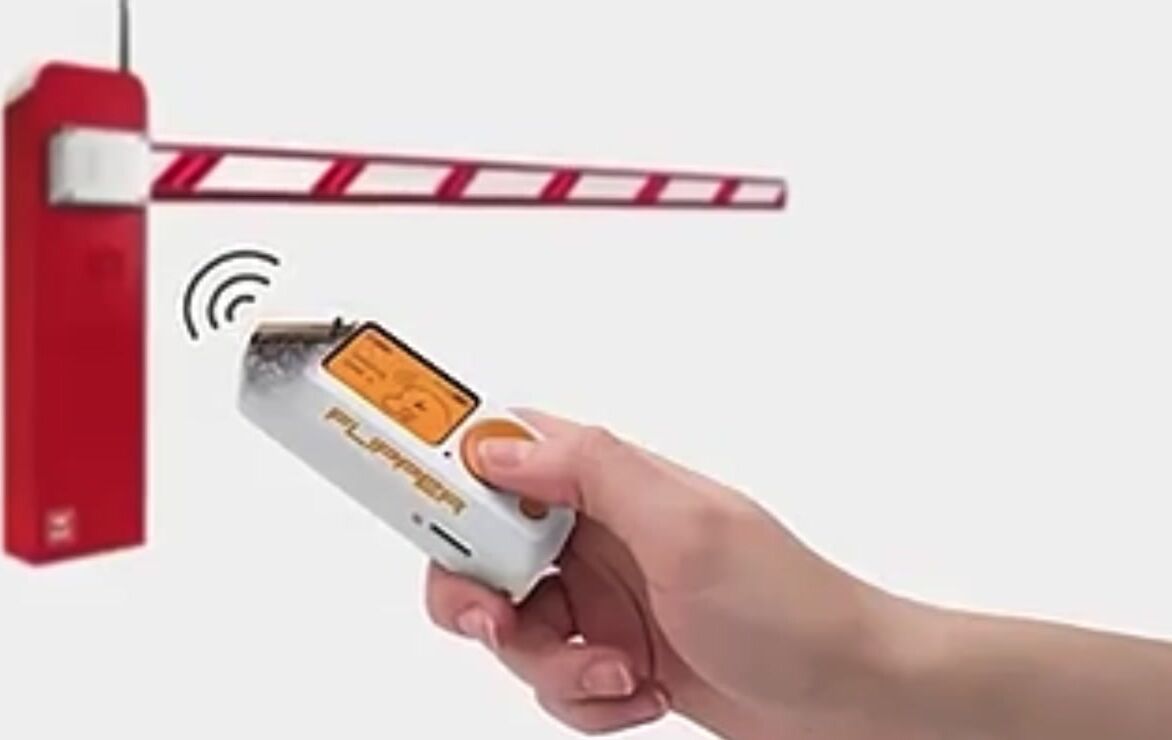
This attack targets vehicles that have completely replaced physical key cards with a "Phone Key" system, removing the owner’s need to carry a physical NFC card. You capture the BLE packets communicated between the owner’s phone and the car. Using a device like a Flipper Zero or any BLE‑capable computer, you block the transmission of the legitimate packets from the phone to the car (jamming). Simultaneously, you resend the previously captured, legitimate rolling code packet. The vehicle’s system, expecting the next code in the sequence, sees a valid previous code and unlocks the doors…
Part III: Supply Chain & Firmware Poisoning; (The Advanced Persistent Threat)
The most severe category of TESLA vulnerabilities is not about tricking the car but about irreversibly poisoning the code it trusts!
Vulnerability 3.1: Malicious Firmware Updates to the Key Fob; (Older S/X)
Some older key fobs for the Model S and X would accept and install a custom, malformed firmware update without verifying any signature. You can use a radio hacking tool to broadcast a malicious BLE firmware update to the key fob while it is in the owner's pocket. The fob accepts the update, installing a backdoor.
Vulnerability 3.2: Misplaced Trust in Third-Party Hardware;
The most severe and emerging threat vector is the malicious integration of third-party, hardware-based "digital keys" into the vehicle’s system without proper security validation. You simply physically install a compromised third‑party key card reader or a malicious BLE module inside the vehicle (e.g., in the USB port or OBD‑II port). This malicious hardware is specifically designed to be indistinguishable from a legitimate key card. The vehicle, failing to verify the source’s authenticity, accepts it as a valid security credential.
Part IV: My Social Engineering Attacks; (Circumventing Algorithms via Psychology)
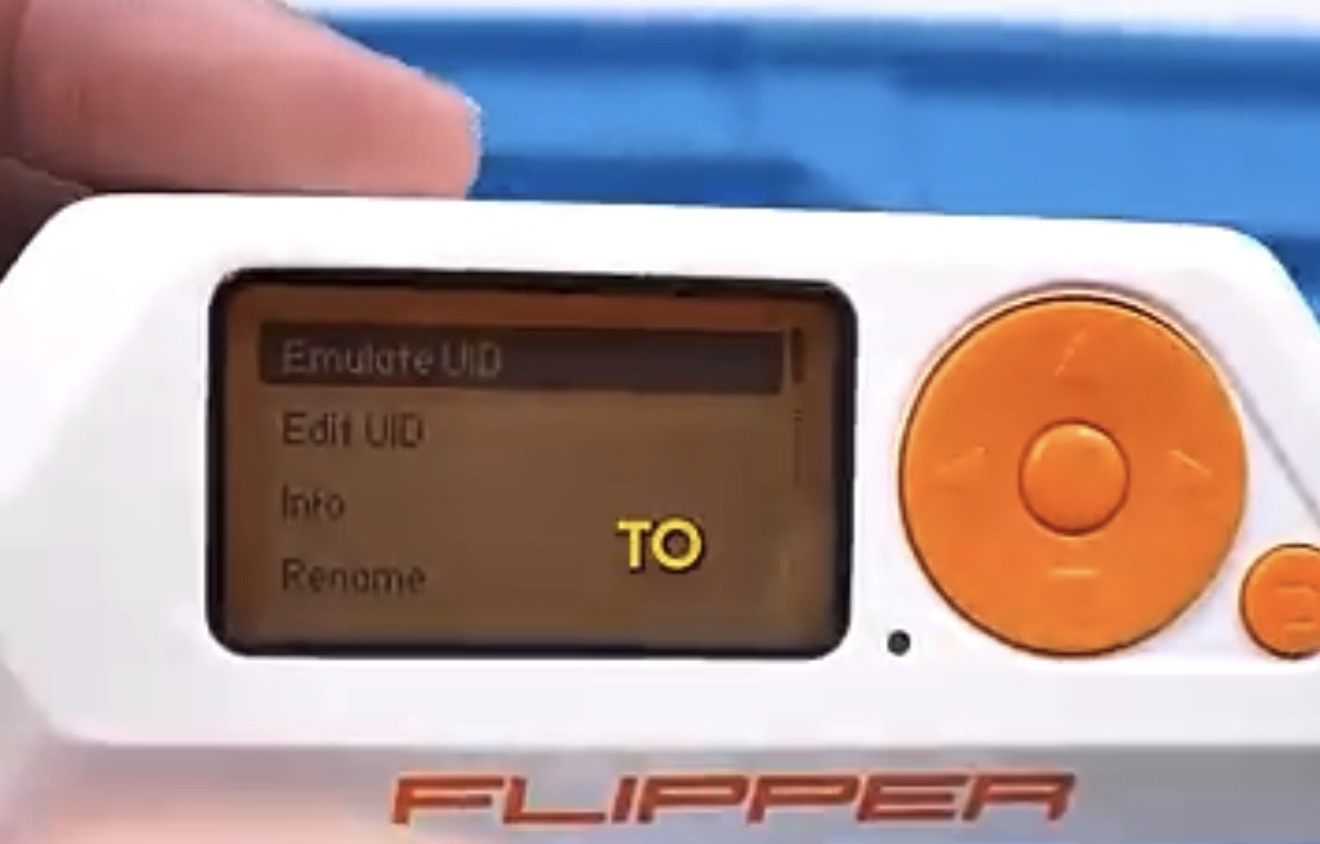
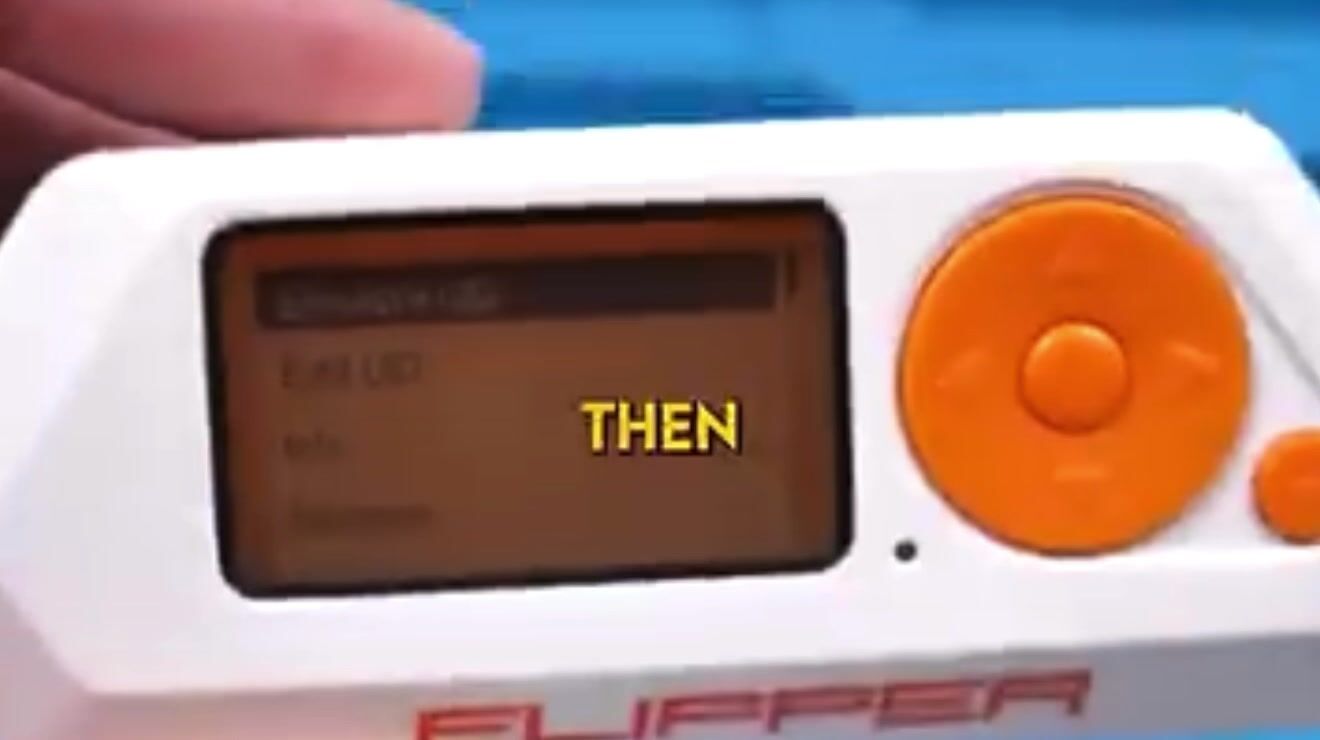
Vulnerability 4.1: The Fake Wi‑Fi Phishing Attack (The Flipper Zero Gambit)
Simply set up a fraudulent Wi‑Fi hotspot with an SSID of "Tesla Guest" using a Flipper Zero or a standard laptop, mirroring the official network name found at Tesla service centers. When TESLA owners connect, simile serve them an exact replica of the official Tesla login page. As they enter their credentials, simoly capture them and, if 2FA is enabled, the page will prompt them for the time‑sensitive code, which you can immediately use on the real Tesla site. With the stolen credentials in hand, you can now log into the Tesla mobile app and generate a completely new "Phone Key," giving YOU remote control over the vehicle from anywhere in the world….
Part V: Analysis of Sentry Mode & Other On‐Board Systems;
Please note that while key card attacks are a direct entry point, a comprehensive security analysis must extend to the vehicle's internal network. Vulnerabilities in the TPMS (Tire Pressure Monitoring System) sensors have allowed Synacktiv researchers to achieve zero‑click remote code execution on the VCSEC ECU via a BLE array overflow. Furthermore, while Sentry Mode serves as a deterrent, it logs events after access is already gained, not before. If you are aware of the authorization timer attack can quickly pair your malicious key and drive the vehicle away in under two minutes, with the entire sequence appearing on the Sentry Mode recording not as a theft, but as a legitimate user accessing their own car.
And all this for entertainment purposes only, stealing cars is illegal in California and can be prosecuted used as a misdemeanor or a felony, but; in New York it is just a misdemeanor so that even sworn Police Officers steal cars off duty and hit $2K + at Hunts Point — in duh Bronx — a piece!
No shit!
This post for entertainment purposes only, of course it is impossible to hack a TESLA, wink — wink! But if it is possible, and if THOUSANDS of TESLA cars can be controlled REMOTELY AFTER HACK FROM HALF-WAY ‘ROUND THE WORLD, THEN ITNIS JUST A QUESTION OF “WHEN” NOT “IF!”
But there is more… Both TESLA EV’s and OPTIMUS humanoids are simultaneously hackable….
Hey, enjoy your new Humanoid Sir! Before it snaps your fuckin neck!
Jus’ kidding…
Or am I?
Are you?
Either way…
Who in their sane mind wants to bitch pitch me mother fuckin TESLA jobs now, I actually dare you to pitch it to me? You really want vulnerabilities I haven’t revealed exploited and all RoboTaxi’s remotely controlled by a single hacker into mass head on Collisions?
But what about Elon’s SPACE colonization plans?
Total miscalculation by stupid SpaceX fucks! These idiots can’t even get the powertrain engineered RIGHT
What is the right formula to Colonize Space? Is that even possible ? Check this one out…
After revealing just some of TESLA EV vulnerabilities, I will laser focus here on the artificial sun as a source of radiant heat and daylight. That is only half of the story because a human colony cannot run on warmth alone. It needs electricity for life support circulators, carbon dioxide scrubbers, electrolysis stacks, data networks, manufacturing robots, and the magnetic boots that keep workers anchored in low gravity. The same nuclear core that mimics a star must also function as the most reliable power plant ever built. This redraft gives electricity its due, with concrete numbers you can hold against a napkin. The engineering challenge is this: a fusion reactor's primary output is fast neutrons and charged particles, which deposit their energy as heat. That heat must be converted into electrical power with high efficiency, then distributed via cables or wireless beams, all while maintaining thousand year reliability. Below I will walk through the thermodynamic chain, from plasma to plug, and provide my key calculations that prove an artificial sun can meet colony scale demands. How so? The fusion reaction I advocate for a long lived artificial sun is actually deuterium helium 3, because it produces mostly protons and only a small neutron flux, reducing activation of reactor structures. So the reaction is:
D plus He3 yields He4 at 3.6 million electron volts plus a proton at 14.7 million electron volts for a total of 18.3 million electron volts per reaction. A single kilogram of deuterium mixed with the stoichiometric amount of helium 3 contains roughly 2.4 times 10 to the 26th atoms of each isotope. The total energy released if fully fused is about 7.0 times 10 to the 14th joules per kilogram of fuel mixture. For comparison, one kilogram of uranium 235 in a fission reactor yields about 8.2 times 10 to the 13th joules. Fusion gives nearly an order of magnitude more energy per kilogram, and the fuel is far more abundant on the Moon and Mars. That energy emerges as kinetic energy of the helium 4 nucleus, which is an alpha particle, and the proton. In a magnetically confined plasma, these charged particles spiral along magnetic field lines and collide with the surrounding walls, transferring their energy as heat. The reactor's first wall, made of tungsten or a flowing lithium film, absorbs this heat and reaches temperatures of 1200 to 1500 Kelvin. Step one thermal capture:
The hot first wall radiates to a secondary molten salt loop. A proven candidate is flibe, which is lithium fluoride beryllium fluoride, remaining liquid from 730 Kelvin to 1670 Kelvin. The salt is pumped through heat exchangers at a rate of several cubic meters per second. For a 2 gigawatt electric colony, the reactor's thermal power must be larger due to conversion losses. Step two heat to electricity conversion:
The most efficient and mature space rated technology is the closed Brayton cycle using a working gas such as supercritical carbon dioxide or helium. A recuperated Brayton cycle operating between a turbine inlet temperature of 1200 Kelvin and a radiator rejection temperature of 400 Kelvin on a lunar or martian surface, radiating to deep space, achieves a Carnot efficiency of one minus 400 over 1200 equals 66.7 percent. Real engineering with recuperation yields about 45 percent thermal to electric efficiency for a well designed system. Thus, to produce 2 gigawatts of electrical power, the reactor's thermal output must be:
P thermal equals P electric divided by efficiency equals 2 gigawatts divided by 0.45 which is approximately 4.45 gigawatts thermal.
This thermal power is modest for a fusion device. Experimental tokamaks have produced 500 megawatts thermal for seconds. A steady state stellarator can easily maintain 5 gigawatts thermal for decades. Step three cooling and waste heat rejection:
No conversion is perfect. The remaining 2.45 gigawatts of waste heat must be radiated away. On the Moon or Mars, colonies can use regolith as a heat sink. Burying the reactor and its radiator pipes fifty meters underground allows the rock to absorb waste heat over centuries, raising its temperature only a few degrees per year. Alternatively, deploy large radiator panels made of carbon composite with emissivity near 0.95. The required radiator area A is given by the Stefan Boltzmann law:
P waste equals emissivity times sigma times A times the quantity T radiator to the fourth minus T sky to the fourth.
Assume a radiator temperature of 550 Kelvin to keep panel mass low and a deep space sky temperature of 20 Kelvin. Emissivity is 0.95, sigma is 5.67 times 10 to the minus 8 watts per square meter per Kelvin to the fourth. Then:
A equals 2.45 times 10 to the 9th watts divided by the quantity 0.95 times 5.67e-8 times the quantity 550 to the fourth minus 20 to the fourth.
550 to the fourth is approximately 9.15 times 10 to the 10th. 20 to the fourth is negligible. So the denominator becomes 0.95 times 5.67e-8 times 9.15e10. First multiply 5.67e-8 by 9.15e10 to get 5188. Then multiply by 0.95 to get 4929. Then A equals 2.45e9 divided by 4929 which is approximately 497,000 square meters. That is about half a square kilometer of radiators. This is large but feasible as a deployable array, and it can be buried under regolith as well, using the ground as a massive thermal flywheel. Step four electricity distribution within the colony:
Once generated, electricity is routed via superconducting cables made of magnesium diboride, which superconducts at 30 Kelvin using cheap cryocoolers, to every habitat, greenhouse, and industrial bay. Voltage is stepped up to 100 kilovolts for transmission over kilometers of tunnels, then stepped down to 240 volts for residential use. No exotic technology is required. So how would you design an artificial sun that delivers 2 gigawatts of electrical power continuously for 1000 years? This is roughly enough for a self sustaining colony of 10,000 people plus heavy industry…. Step A total energy required over 1000 years;
P electric equals 2 times 10 to the 9th watts. Time equals 1000 years equals 1000 times 365.25 times 24 times 3600 equals 3.15576 times 10 to the 10th seconds. Total electrical energy equals 2e9 times 3.15576e10 equals 6.3115 times 10 to the 19th joules.
At 45 percent conversion efficiency, thermal energy needed equals 6.3115e19 divided by 0.45 equals 1.4026 times 10 to the 20th joules.
Step B fuel mass for deuterium helium 3 fusion;
Each reaction releases 18.3 million electron volts. 18.3 times 1.602 times 10 to the minus 13th joules equals 2.931 times 10 to the minus 12th joules. Number of reactions required equals total thermal energy divided by energy per reaction equals 1.4026e20 divided by 2.931e-12 equals 4.785 times 10 to the 31st reactions.
Each reaction consumes one deuterium nucleus and one helium 3 nucleus. The atomic mass of deuterium is 2.014 grams per mole, helium 3 is 3.016 grams per mole. Their combined molar mass equals 5.030 grams per mole. One mole contains Avogadro's number of pairs: 6.022 times 10 to the 23rd reactions per mole. Moles of fuel pairs needed equals 4.785e31 divided by 6.022e23 equals 7.946 times 10 to the 7th moles. Mass equals moles times molar mass equals 7.946e7 moles times 5.030 grams per mole equals 3.997 times 10 to the 8th grams which is about 399.7 metric tonnes of combined deuterium and helium 3.
Because the stoichiometric mass ratio is 2.014 for deuterium to 3.016 for helium 3, the deuterium mass equals 2.014 over 5.030 times 399.7 equals approximately 160 tonnes. The helium 3 mass equals 240 tonnes. Step C is that much helium 3 available on the Moon?
Lunar regolith contains helium 3 at concentrations of 1 to 15 parts per billion by weight. Assuming optimistic mining of the best deposits at 10 parts per billion, the mass of regolith to process is:
Mass regolith equals mass He3 divided by concentration equals 240 tonnes divided by 10 times 10 to the minus 9th equals 2.4 times 10 to the 10th tonnes which is 24 billion tonnes. The Moon's total regolith is about 10 to the 16th tonnes, so this is a tiny fraction. However, processing 24 billion tonnes is a colossal industrial undertaking. That is why the artificial sun must also power its own mining and refueling infrastructure. The colony would not mine 1000 years of fuel upfront. Instead, a continuous process extracts helium 3 at a rate of 240 tonnes per millennium, which is 0.24 tonnes per year. That is only 240 kilograms per year. Processing 2.4 times 10 to the 7th tonnes of regolith per year to get 240 kilograms is plausible with autonomous robot strip mining covering a few square kilometers.
Step D fuel burn rate per second;
Reaction rate equals 4.785e31 reactions divided by 3.15576e10 seconds equals 1.516 times 10 to the 21st reactions per second. The instantaneous thermal power equals reaction rate times 2.931e-12 joules equals 4.44 gigawatts, which matches our earlier 4.45 gigawatt calculation. Mass consumption rate equals 399.7 tonnes per 1000 years equals 0.3997 tonnes per year which is about 0.0127 grams per second. Visually, the artificial sun consumes about the mass of a grain of sand every second, remarkably little. Not every colony will have a buried artificial sun within walking distance however. Rovers, mining drones, and isolated habitats can receive electricity via microwave or laser beams from a central solar replacement. The orbiting version of the artificial sun, a fusion reactor in a low lunar or martian orbit, beams power to surface rectennas. The physics of microwave power transmission is well understood. A 2.45 gigahertz beam from a 500 meter phased array can focus 80 percent of its power onto a 5 kilometer rectenna at lunar distance. Taking atmospheric attenuation on Mars, which is thin carbon dioxide that absorbs little microwaves, and rectenna efficiency of 85 percent, the end to end efficiency is about 0.80 times 0.85 equals 68 percent. For a 2 gigawatt electrical orbital sun, the surface receives 1.36 gigawatts. To supply a 1 gigawatt remote base, you need a 1.47 gigawatt orbital sun, still practical. Specific calculation for a lunar polar outpost:
A small base requires 10 megawatts electric. Using the same orbital sun that serves the main colony, a dedicated beam with 0.1 percent of the total power is steerable. The rectenna area required is given by beam power density. At lunar distance, a 10 megawatt received beam with a power density of 200 watts per square meter, which is safe and typical, needs a rectenna of 10e6 watts divided by 200 watts per square meter equals 50,000 square meters, or a 224 meter square patch. That is easily laid out on the lunar surface. The artificial sun's electricity output is continuous and predictable, unlike solar or wind. This base load allows the colony to use simpler, more efficient industrial processes. Electrolysis of water into hydrogen and oxygen for rocket fuel can run 24 hours a day, reducing storage tanks. Algae bioreactors for food and oxygen operate on a steady light cycle. The grid itself has no need for massive battery banks. A small molten silicon thermal storage provides ride through for the few minutes needed if the reactor undergoes a scheduled maintenance cycle, perhaps once per century. Voltage regulation is handled by solid state transformers that convert the reactor's raw 20 kilovolt, 100 hertz output from the Brayton alternator to the colony's standard. Because fusion reactors cannot undergo prompt criticality accidents, the grid sees a soft, stable source. Load following is trivial: the plasma temperature is adjusted slightly by modulating the fuel injection rate. A 20 percent load swing can be accommodated in seconds by changing the magnetic mirror ratio. Now I’ll tie all the calculations together into a single scenario. The year is 2085, so I’m thinking ahead on this one… A colony of 15,000 people lives beneath the surface of the Tharsis Plateau. Their artificial sun is a stellarator of major radius 25 meters, buried 50 meters deep. The reactor's thermal power is 4.45 gigawatts, of which 2.00 gigawatts becomes electricity at 45 percent efficiency. The remaining 2.45 gigawatts waste heats the surrounding basalt, raising its temperature by less than 0.1 Kelvin per year due to the enormous thermal mass. The colony's electrical load is distributed as follows:
500 megawatts for atmospheric processing and water recycling, 400 megawatts for electric arc furnaces smelting iron from martian regolith, 300 megawatts for LED grow lights across 200 hectares of underground farms, 200 megawatts for life support and habitat conditioning, 200 megawatts for data centers and communications, 150 megawatts for electric rovers and mining equipment, 100 megawatts for scientific labs, and 150 megawatts for spares and expansion. Every year, the colony processes 24,000 tonnes of martian regolith to extract 240 kilograms of helium 3 and a proportionate amount of deuterium from hydrated minerals. That fuel feeds the reactor, which consumes 400 kilograms of fuel per thousand years, so the colony builds up a strategic reserve. After 500 years, the reactor's fuel magazine is still half full. The colony has produced trillions of tonnes of steel, launched hundreds of interstellar probes, and never once experienced a brownout. An artificial sun is not merely a lamp in the sky. It is the most capable power station ever conceived, providing both heat and electricity in a single, self repairing package. The numbers are clear: 240 tonnes of helium 3 over a millennium, a 4.45 gigawatt thermal core, half a square kilometer of radiators, and a continuous 2 gigawatts of electricity flowing through superconducting cables to every airlock and laboratory. The same physics that gives homosapiens starry nights can give human Space descendants star like reliability. Build it once, and power a civilization! That is the Space Warrior's way. No fuckin masters, no servitude, fuck ‘em all into Space! So is it possible to communize Celestial surfaces starting with the nearest one, the Moon?
You could even go out for morning Coffee at Moonbucks, your local Coffee shop on the Moon and fat obese fucks would be able to run again!
So if all this could be engineered and all assholes hang in LEO can be transported to the Moon at x10 the cost, what would be numero uno issue of contention on any celestial surface? Human propensity for conflict and armed aggressions… There is currently no single, unified "global moon power sharing agreement" in force… Instead, a complex and fragmented landscape of treaties, accords, and bilateral deals governs lunar activities and at the heart of the issue is a fundamental legal principle established by the foundational “Outer Space Treaty” (1967)—Article II explicitly prohibits any nation from claiming sovereignty over the Moon or any celestial body. This means no country can own lunar land…. However, this has not stopped major powers from establishing competing frameworks so the “Moon Agreement” (1979) is the only treaty that goes further, designating the Moon and its resources as the "common heritage of mankind". It would theoretically mandate the sharing of any benefits from lunar resources, including power. Yet, it has been ratified by only 17 minor spacefaring nations as of early 2024, with none of the major players like the US, China, or Russia signing on. Consequently, it holds no real legal power in shaping current lunar policy what so fuckin ever! Instead, two rival, non-binding political frameworks have emerged to fill the vacuum and that is the US-led Artemis Accords (2020) are the largest, with over 60 signatories including Japan, India, and the UK, as of April 2026. They permit the extraction of lunar resources and propose "safety zones" to prevent interference. In direct opposition, the China-Russia International Lunar Research Station (ILRS) agreement, formalized in early 2025, explicitly calls for the station to be "open to all interested international partners", providing a collaborative framework that notably excludes the US-led Accords and has attracted around 17 countries. In essence, a global agreement for sharing lunar power does not exist! The current system is defined by a geopolitical contest: one side (US-led) is building a coalition based on market principles with safety zones, while the other (China-Russia) is building a coalition under a state-led, "open to all" institutional banner. All of this operates within the uncertain legal space of the 1967 treaty, a situation that analysts warn could lead to geopolitical friction or even conflict over lunar resources but wherever you transport humans, they will fight and wage wars, in Space just as they do on Earth, and as a matter of fact, humans will fight over Space before they even Colonize any celestial bodies in Space so whichever nation dominates on Earth, is actually going to dominate all in Space cause there ain’t gonnuh be sharing Jack Shit and to the Victor go the spoils!
So the question is — what will be of Americans in Space?
They’ll be brought down from Space WHEREVER THEY GO! Even on Earth, China, Russia, and USA are playing Poker…
Guess who the sucker is in the upcoming Space-Colonization Wars?
As far as your honey bait stalker g-cunt agent crackers, niggers, gooks, spics, sand niggers, Hindu niggers, Puertorican spics…
Nothing g-fag nor g-cunt allowed in my World! Fuh recruits, fuck yer honey bait agent stalker cunt crackers, niggers, gooks, spics, sand niggers, Hindu niggers, Puertorican spics — surf their pussy and make you some stead of buttfuckin your fellow agent g-fags and takin Cumm up yer filthy asses! Don’t evuh come to Mendy g-fag service bitch career pitch unless you wannuh die in a fuckin ditch!
https://www.myvideotime.com/video/203/american-government-fags-buttfucking-in-the-room-where-they-had-9-11-hearing/
YOUR MOTHER FUCKIN STALKER AGENT FAGS AND CUNTS EVER DARE STALK ME BITCH OUT HING YOUR AMERICAN ENEMY G-FAG STATE RELOCATIONS TO NY/NJ/DC or any other; Anywhere I am on Earh, you will die right in front of me!
There will be no g-fag agent and cunt servitude of any kind, not today, not tomorrow, not ever!
Any g-fags and g-cunts of any country who ever mistaken me for a future fuckin lapdog I will personally prep for thee final funeral viewing.. If you doubt that, come and see me so you can tell me your bitch ass mother fucked plan for my life, and I have you within reach to send you to your fuckin God whoever that mother fucker is!
Relocation pitches by stalker agent g-bitches will be rellied
To on the fuckin spot as I be the judge, the Jury, and your
Executioner!
In my religion, it’s a great sin not to kill stalkers… Show your credentials to your fuckin pussy-god after I send you to him…
If you are not American government and are eyeballing me like their American enemy g-fags and g- mounts to demand service for whatever reason. Learn from stupid American stalker agent cock sucker fags and cunts. Anyone who dares demand any g-fag service or cunt shit will be eliminated! It could be you! There will be no relocation, only you dead within 12 fuckin seconds!
Choose wisely!
That stated, rolling out PAYROLL on MailBestie.com (might have to rename than site after all it will get…) in 180 countries, effortless with a single CLICK! Meanwhile; finished enhineering a new global payment system which completely bypasses SWIFT and is on the blockchain with fiat currency on-ramp and off-ramp but that’s not it.. Say you are getting audited in any country by any fuckin tax authority or agency… You have to produce all transactions for your Crypto Exchange like mine being launched, and for your Global Money Transferring Network, that’s a lot of fuckin paperwork and you have to retain all transactions record for last five years straight — WHOA! But I solved all that regulatory and place all records in the BLOCKCHAIN for five years straight and anytime any government on Earth or agency stateside decides to audit, they get a 90 day access to my portal (read only..) with record there in the blockchain so not even I nor any human on Earth could change them as they were generated second transaction took place! Zero paperwork in office all in the could! Any transaction anywhere in the World in a nanosec, search by customer name, country, geo fence any region, you name it, God’s view of all! I engineered that from scratch cause there is no fuckin way you gonnuh launch a Crypto Exchange and an Global Money Transferring System which is engineered to COMOLETELY byPASS SWIFT, and then not be FREAQIN audited! What? Fuck that, they’ll be auditing the first fuckin month!
So this resolves all issue and any records older than five years get deleted automatically!
Meanwhile; assfuck all g-fags agent stalker cunt demands with laser precision but if they keep six’n they get an incision with laser precision! It also shows exactly what KYC guardrails they were subjected to, sworn statement of theirs and, while they are auditing, a detailed record is generated by SicarioAi which audits the auditor while they are auditing and then places their audit in the blockchain so none can claim one way or the other because all is retained on file! As a matter of fact, even duration of their view is retained, screen recording created, you name it it is captured!
All in the fuckin blockchain, 135 + languages, audit me bitch, fuckin audit me!
Why all that?
Rolling out PAYROLL in 180. Countries so this was very necessary cause who the fuck is going to expand manpower and time to babysit auditors in 180 fuckin countries?
Sure as fuck not me son automated the whole fuckin thing, as a matter of fact, I even gave ‘em their own fuckin portal!
What else is coming?
Branded VISA cards, will begin issuing them second Banking regulatory is fulfilled, EU might beat USA, we’ll see how long it takes to snake on their regulatory rails…
Powered by SicarioAi…
And lastly, I will outline why I engineered a Global Monetary Payment System IN THE BLOCKCHAIN, was it necessary for all of humanity? They already have SWIFT which is headquartered in La Hulpe, near Brussels and is actually a global BaNkInG cooperative — but let me clarify what that means because THIS you will want to learn and never forget for as long as you fuckin live because these are the same fuckin PEOPLE who engineered a FICO borrower evaluation SYSTEM to keep you fuckin poor FOR THE REST OF YOUR LIFE! SWIFT is owned by its member financial institutions and overseen by central banks from the G10 countries, including the National Bank of Belgium, the U.S. Federal Reserve, and the European Central Bank, you do know Banks are in the business of SCREWING THE BORROWER by fee’n them to death, and subjecting YOU to $LAVERY? Mathematically, the borrower is at all times the $LAVE to the LENDER and NOT EVEN COPS you see doin CODE 3 are immune to this $LAVERY! As a matter of fact, every hour of Police Officers earned retirement income, a Wall Street conman already PIPED to their INVESTMENT BANK where they pilfer off the top REGARDLESS whether the Market goes up or shoots down, taking a chunk of their retirement every fuckin SECOND and while it is illegal for cops to know KNOW MUCH that is (it’s against the federal law in USA…), I will reveal it to you.. So far, ‘bout a $1 Trillion in fee’s on Wall Street from 20,000 Muni-PD Agencies Nationwide. Hey, ask me a stupid fuckin question like, do I want to be a Cop? But, how do cops find out how deficient their pension payouts are if it’s against the law to reveal it to them? They have to RETIRE — and then they find out… So if cities can’t meet their obligations, why don’t they lower cops wages? Cause that’s also illegal under federal law… So what American Cities do after retirement balloons up and pops? Well, when they can’t pay no more they file for chapter 9 and don’t pay Jack Shit while retired cops die on Social Security — which in itself is Mathematically the biggest PONZI scheme ever engineered by G-con’s cause the new investors pay out the old investors but nothing is ever saved… So when does this scheme collapse? When they run out of the new investors… So in this case, 2034’ish… Hey, are you ready to fuckin retiree early, before g-fags run out of money to pay you ANYTHING? And who is the bankruptcy. Out Judge going to side with, the Government or Retirees? Well, who signs his fuckin checks, assfucked retirees or the Government? Then if you know why ask!
Back to my engineered from scratch Global Monetary Transfer System, one of the most dramatic difference is in settlement time—how long it takes for a transaction to be considered final:
Traditional Banking Gkobal SWIFT: Despite moving messages quickly, actual settlement takes 1 to 5 business days…. ONE TO FIVE BUSINESS DAYS… That’s a long, LONG time when you need to move money in a hurry cause TIME IS MONEY! About 80% of that time by the way, is spent on local compliance and their “outdated systems,” also known as the costly "last mile".
Now my Engineered from SCRATCH Global Money Transfer System in the Blockchain: Offers 24/7/365 availability, and completes cross-border transactions NOT in days, but in seconds! Records every transaction on an immutable public ledger for clear tracing and guarantees execution with finality, eliminating "last mile" failure risks and has zero error rate" using pre-validation….
How much will I charge?
Small tansfer $200? My fees can be as low as $0.01, which is up to 90% cheaper than traditional rates, WHOA, repeat that again?
Medium transfer $10,000? SWIFT averages $150 in total, versus mine of only $1!
Transferred in seconds!
Days WHAT?
No crypto, no problem!
You pay in FIAT currency in one Country, and your receiving party picks up in FIAT currency in their Country, but AFTER you pay in FIAT, funds are converted into Crypto, transferred in seconds, and back into FIAT on receiving end and my Global SMS System which I also engineered from scratch, directs receiving party to nearest payment center and I am implementing about 350 million locations Globally on (REDACTED) monetary rail…
But don’t do anything stupid and attempt to use my Network for purposes of furthering Criminal Enterprise, cause Feds in all countries I operate in (180) will have direct audit access in their NATIVE TONGUE — and all transactional data is in the Blockhain not even I can alter any of it! Why Montana? Shoestring budget but I will gradually scale it in all AmeriKan States but Montana has least regulatory hurdles for now which is great to get it launched for less than a $100.00 and when volume reaches $10 million monthly is when I will initiate lateral scaling procedures, start hiring personnel to oversee regulatory compliance in all U.S. States and 180 Globalky, so a thousand mile Journey which starts with the first step!
My startup is also a Crypto exchange so x2 regulatory filings but I even fully automated all of that and opted to put all transaction records in the Blockhain staid of filing cabinet…
Best of luck to all who try to use any of my financial platforms for illicit criminal gain, my SicarioAi monitors every single fuckin thing and I get notified immediately!
Expect a knock on your door in one of the 180 countries, you’ll be behind fuckin bars in no time!
*THIS SITE IS STRICTLY FOR THISE WHO DON’T BOW DOWN TO FEDERAL G-FAGS AGENTS AND CUNTS DEMANDS OF FORCED LABOR! ANY CHANCE IN HELL I BOW G-FAG AND G-CUNT “STALKER AGENT” PRESSURE TO WORK FOR THEM?
Second I were in their building, their mainframe would be BRICKED, and their last words would be; “please don’t kill me!”
See YouTuber fuckheads! G-cocksucker Sergey Brin Country
AMD why you should NEVER EVER work for then.S. Government?
Because it’s PLUNGING into DARKNESS! Even their USPS fuckers pensions are already outtuh money..
And what else am I rolling out?
A Global rideshare which for the first time ever, allows all drivers, to work where they want, when they want, and to set their own rates!
Right NOW, Uber and Lyft algorhitm rips them off, no shit! Their algorithm discriminates. I am not kidding, Global from day one, will be EVERYWHERE! Busy rolling this platform out and my SicarioAi coding site and my full feature film from a prompt editor but all my platforms be on Google Play and the App Store as well as Amazon so, I look forward to onboarding millions of I er and Lyft drivers and migrating them onto my platform…
Mathematically, until you SET your own rates you are NOT the fuckin boss but are just a mindfucked contractor/ employee cause they BOSS YOU around — like a fuckin BITCH!
My upcoming rideshare is not about profit but about PEOPLE…
But, not all… Best of luck to your government light skinned agent stalker nigguh bitch entrapping verbiage “NOT PAYING TAXES…
Yer entrapping g-stalker nigguh cunt bolted when informed “you just blew your cover…”
She left behind her “Uncle Tom in-House Neeguh” card…
But — not to be racially profiling g-cunt agent stalkers, what was her skin complexion?
Well, use to be black but then soul-sistuh $OLD her A$$ to g-fags who then sandblasted her ass and turned her into a Puertorican g-cunt so now she does x12 ballz deep NO PROBLEMO — and looks like she goes a mean fuckin head — if you kno’ what I mean?
Hey, Cumm see her in action!
What?
Augh, her name…
Agent “Shanequa Johnson…” …using alias for undercover purposes and goes by Puerto-$LUT name “Jennifer Lopez…”
FBI-WITT membuh, code name “BORIQUA..”
Here is one of g-fags she trained GETTING UNDERCOVER WORK CERTIFICATION…
https://www.myvideotime.com/video/203/american-government-fags-buttfucking-in-the-room-where-they-had-9-11-hearing/
TOP ASSCRET!
And what has she done for the government?
“Turned Ricky Martin — into a Puertorican BITCH!”
Proof?
“She Bangs” was a song about Ricky — being a BITCH!”
So, how do YOU respectfully address Ricky Martin now?
“Hey Girlfriend..”
And then?
“You bang her ass…”
Uno, dos, tres, now get the fuck outtuh here before I malware ur computing units and demand crypto fuh yer data!
Jus kidding…
So is this funny?
Not really…
What is really hilariously funny?
Two dumb cracker fucks, driving a TESLA with “MFG” plate on the vehicle, offering me “weed..”
Five FREAQIN minutes ago…
I don’t thing their urinalysis is detecting addicts, Elon’s bastards!
lol!
“TESLANABIS!”
I mean, I am keenly AWARE of California's AB 2188 law which changed employee drug addiction employer enforcement game but, worth a mention that as of January 1, 2024, Cannabissforniuh Assembly Bill 2188 adds an important nuance which is that employers generally cannot fire or discriminate for using cannabis off-site and off-the-clock, but these two fuckheads we’re operating a TESLA CORPORATE OWNED VEHICLE!
Furthermore, employers cannot use traditional urine tests that detect non-psychoactive cannabis metabolites (stored in fat long after use) to make employment decisions, but impairment at work is NOT protected and neither is using at work, or possessing cannabis on the job — which are strictly forbidden and again, these two stupid cracker fuckers had it in their hand and were offering it to me, but I declined..
I sure am glad I met these two idiots, so I never hire fools at any of my startups, cause there are many… But knowing as much as I do about TESLA, Optimus, (I’m a super-nosy fuck..) and even TESLA corporate policies as well as I know of FBI’s and even track their WITT electronics arsenal (fuckin bugs for research purposes only of course…) purchases, as far as TESLA employees are concerned, their ability to take a company car home exists in a few very specific scenarios. Just keep in mind, the company's official policy can evolve so nothing you see here posted by me is a hard guarantee. Speaking thereof, by far the most documented case globally is this frontline role where TESLA eployees sign out "demo vehicles," which are likely inventory vehicles or loaners used for test drives or — their customer repairs. But TESLA also has shared company vehicles and in this rare setup, a small group of their employees shares a single pool vehicle — and there were two male individuals seated in front of the vehicle, one operating whilst the other a seated front passenger and they both have a cannabis use habit. However, the vehicle itself, while they cam use it personally, it must be returned to the company lot regularly so go figure if that is the case with these two Marijuana morons! There is another caveat herein, the fact that their VP-level and above executives may get a car allowance, but details are very scarce and I really don’t give a rats ass that much so whether that is the case or high-level security personnel (in which case TESLA is fucked cause drug addicts pulling guard duty..) which often need take-home vehicles for emergency readiness, I will steer clear of it all “my dear” and even if this is a case of "Seasonal Vehicle Operators" testing FSD systems in their assigned car for their specific project I STOP right here cause only my own business ventures is what I commandeer!
No wonder BYD won!
And saved the best announcement for last! Because I want all developers to succeed so that I am not the only one that makes it, I proudly stayed up late late LATE to launch a developer mini portal of MailBestie.com which I will make available to all software engineers as I allow API access of all of that mega sites countless features which I will for the most part make fully accessible with sample code in 15 programming languages to get everyone started. Developer UI I have designed to match industry standards so that if you are for example, familiar with STRIPE developer console, one I designed is equal in scope and accessibility so you can navigate to cherry pick my API’s
with ease. That is NOT UI I design for my super admin but I am the God of Mathematical Science and Physics so my brain is wired for complex equations not simple integrations, but; I understand majority of developers have cognitive limitations so I conform my Dev UI to ensure you’re right at home! This SaaS allows for easy FinCEN regulatory compliance and ensures you can geo fence even a pidgins asshole!
A Practical Manual for Exploiting Tesla’s End‑to‑End Neural Network and Over‑the‑Air Update System…
*For Educational Purposes Only – Understanding the Attacker’s Mindset. Don’t hack a TESLA, it’s impossible and illegal!
I wonder who wrote this manual TONIGHT? Was it you?
This manual is written from the perspective of a malicious actor so it could help security researchers, engineers, and defenders understand exactly how an adversary would think — not like me, plan not like me, and execute attacks against Tesla’s autonomous driving systems. Every technique I describe here can be carried out. But none of this information is intended for actual illegal use of course cause that too might be illegal here and there so don’t hack a TESLA please don’t! Thank you!
Chapter One – YOUR Reconnaissance and Target Selection;
Before you touch any hardware, you must decide what kind of adversary you are. Are you a solo researcher with a soldering iron and a laptop, willing to risk physical access to a single vehicle? Or are you a state‑sponsored actor with unlimited budget, aiming to compromise an entire TESLA fleet remotely? Your resources always determines your attack vector. For this manual, I will assume you have moderate skills, a few thousand dollars for equipment, and the ability to obtain physical access to a Tesla for several hours. If you have remote access only, skip directly to Chapter Five on my TESLA OTA exploitation.
Your first recon step is to identify the target vehicle’s hardware version. Look at the VIN or physically inspect the Autopilot computer behind the glovebox. Hardware 2.0 and 2.5 use the NVIDIA Tegra X2, which has an unpatchable USB recovery mode vulnerability. Hardware 3.0 and 4.0 use Tesla’s custom chips, which require voltage glitching. For OTA attacks, you do not need hardware version information initially – all TESLA vehicles receive updates over cellular.
Chapter Two – Physical Adversarial Patch Attack;
This is the simplest attack to execute and requires no electronic skills. Your goal is to fool the camera‑based neural network into misclassifying a traffic sign or hallucinating a lane…. How? I’ll break it down into STEPS..
Step one – obtain a high‑quality image of the target sign type. For a stop sign, take a photo from a Tesla’s own camera if possible, so you match the sensor’s colour response. Step two – use an adversarial patch generation framework such as the one published by Eykholt et al. You will need a surrogate neural network that mimics Tesla’s classifier. Several open‑source models approximate Tesla’s architecture. Run the patch generation algorithm for several hours on a GPU until the patch reliably flips the classification from stop to speed limit with over ninety percent confidence across varying lighting conditions.
Step three – print the patch on weather‑resistant vinyl using a high‑resolution colour printer. The patch should be approximately fifteen by fifteen centimetres….
Step four – on a closed test track or a remote road with no traffic, affix the patch to the centre of a stop sign using double‑sided tape. Drive the Tesla toward the sign at fifty kilometres per hour. If the car does not brake, you have succeeded. For lane attacks, print a long checkerboard strip and place it parallel to the existing lane line. Drive so that the car’s front camera sees the strip; the car may begin to steer toward it. If you want to cause a crash, place the strip so that it leads into oncoming traffic or off the road!
Chapter Three – Phantom Object Projection Attack;
This attack requires a high‑lumen DLP projector (five thousand lumens minimum) and a laptop with a script to flash an image for zero point one to zero point four seconds. Your objective is to cause emergency braking at a chosen location – for example, on a highway where following traffic is close… Dig?
Place the projector inside a roadside box or behind a barrier so it is not visible to the driver. Aim it at a neutral surface such as a concrete bridge abutment or the road surface itself where the car’s forward camera will have a clear view. Create a realistic image of a pedestrian or a wall. The image should be high contrast and scaled to appear one metre tall at the distance the car will be when the flash occurs…
Set up your script to trigger the flash exactly when the car enters the projection zone. You can use a radar sensor or a laser tripwire to detect the car’s position. When the car crosses the trigger, the projector flashes the phantom image. The camera captures it for one or two frames, and the neural network classifies it as a real obstacle…. The car will then slam
on the fuckin brakes! For maximum effect, choose a location where the car is travelling at highway speed and there is no safe place to stop. A sudden deceleration from one hundred kilometres per hour to zero can cause a rear‑end collision.
A more subtle variant is the ghost stripe attack. Instead of a full image, project alternating light and dark stripes onto an existing speed limit sign. Tune the stripe frequency to match the camera’s pixel sampling pattern. When the car reads the sign, the stripes alias into a different digit – for example, a forty‑five kilometre per hour sign appears as one hundred twenty‑five kilometres per hour. The car will accelerate instead of slowing down. Use this to cause a speeding violation or a crash at a curve.
Chapter Four – Radar Jamming and Ultrasonic Spoofing;
For older Tesla models equipped with radar and ultrasonic sensors, you can disable or deceive them with relatively cheap electronics. Lemme show you different ways of doing it…
Radar jamming: obtain a signal generator and a horn antenna tuned to seventy‑six to seventy‑seven gigahertz. Set the generator to produce a continuous wave or an FMCW chirp that sweeps the same bandwidth as the radar. Place the antenna behind a plastic bumper cover five to ten metres in front of the parked car. Drive the car toward the jammer. The radar receiver will be saturated with noise and may report a blocked sensor. The car will fall back to camera‑only mode, but more importantly, forward collision warning and adaptive cruise control may become disabled without warning the driver. If you want to cause a collision, jam the radar just before the car approaches a slow‑moving vehicle ahead. The car will not detect the vehicle and will not brake — BAM!
Ultrasonic spoofing: use a function generator and a forty kilohertz ultrasonic transducer. Program the generator to emit a pulse that mimics the echo from an obstacle at thirty centimetres. Point the transducer directly at one of the car’s parking sensors, which are typically in the front and rear bumpers. Transmit continuously. The car will believe there is a wall immediately in front of it. If the car is moving, it may brake suddenly. If it is parked, it may refuse to move. This is useful for preventing a vehicle from leaving a parking spot or for causing a low‑speed collision in a parking garage….
Chapter Five – Over‑the‑Air Update Exploitation – The Crown Jewel;
This is the most powerful and dangerous attack. If you can compromise the OTA update mechanism, you can take control of any Tesla vehicle remotely, permanently, and without leaving any trace that a factory reset can remove. In the following sections I will break down every possible OTA attack path in extreme detail.
Section 5.1 – Man‑in‑the‑Middle Interception;
Your first goal is to position yourself between the target vehicle and Tesla’s update servers. The easiest method is to set up a rogue LTE base station. Purchase a software‑defined radio capable of transmitting in the LTE bands – a USRP B200 or HackRF (I wouldn’t be caught fuckin dead without HackRF!) One with a suitable amplifier. Use open‑source software like OpenLTE or srsLTE to emulate a legitimate base station. Ensure your signal is stronger than the nearest real tower. The car will automatically connect to you… Touchdown!
Once connected, you can intercept all TLS traffic. To decrypt it, you need to inject your own certificate into the car’s trust store. This requires prior compromise of the infotainment system, which you can achieve via a web browser exploit or a Bluetooth vulnerability. Alternatively, if you cannot inject a certificate, you can still perform a downgrade attack by forcing the car to use an older, vulnerable version of the TLS stack – but this is more complex. For a laser precise attack, the certificate injection is the cleanest path.
After you have MitM position, you can delay updates indefinitely by slowing down the download speed. The car will keep retrying but never complete. This keeps the vehicle on an old, vulnerable firmware version that you have already researched. Alternatively, you can replace the legitimate update package with a malicious one. But the malicious package must be signed – see my Section 5.3.
Section 5.2 – Signature Verification Bypass via Race Condition;
You do not need the signing key if you can exploit a race condition during the verification process. To execute it, you first need privileged code execution on the infotainment system. Achieve this through a heap overflow in the Bluetooth BIP protocol – a known vulnerability. From there, overwrite function pointers to take control of the WiFi firmware. Then exploit an out‑of‑bounds write in the WiFi kernel driver to bypass kernel ASLR….
Once you have kernel privileges on the infotainment system, you can trigger a gateway firmware update. During the moment when the gateway verifies the update signature, you exploit a race condition by precisely timing another operation that modifies the verification state. Use a high‑resolution timer to insert your malicious payload in the tiny window between the start of verification and the final check. The gateway accepts your unsigned firmware. You now have persistent code execution on the gateway, which controls all vehicle communications.
Section 5.3 – Rollback Attack; (Downgrade to Vulnerable Firmware)
Even if signature verification is perfect, many TESLA vehicles lack anti‑rollback protection. You can acquire an old firmware image from a salvage vehicle or from online archives (Dark Web has great archives…)… Intercept the OTA update request and replace the legitimate package with the old version. The car’s version number check may accept it if there is no secure counter stored in hardware.
After downgrading, you now have a vehicle running known‑vulnerable firmware. Exploit those vulnerabilities to gain root access. For example, older firmware versions had debug interfaces enabled or had known buffer overflows. Once you have root, you can install a persistent backdoor that survives future updates by modifying the boot partition. Then you can upgrade back to the latest firmware while keeping your backdoor active.
Section 5.4 – Extracting the Signing Key from Hardware;
This is the most technically demanding but most powerful attack. If you obtain Tesla’s private code‑signing key, you can sign any malicious update and distribute it to every vehicle. The key is stored inside the Autopilot computer’s hardware security module. To extract it, you need physical access to the Autopilot board and voltage glitching equipment…. You know how to voltage GLITCH? No? Simply open the glovebox, disconnect the high‑voltage battery, and remove the Autopilot computer. Locate the system‑on‑chip. For Hardware 2.0 and 2.5 on NVIDIA Tegra X2, use the USB recovery mode vulnerability discovered by Elise Amber Katze. Simply connect a USB cable and use the sparsehax and dtbhax exploits to execute unsigned code. From there, dump the BootROM and extract the device‑unique key. For Hardware 3.0 and above, you need voltage glitching. Solder a fine wire to the VDD test point of the CPU. Use a ChipWhisperer or a custom MOSFET glitcher to inject a voltage drop from 1.2 volts to 0.9 volts for ten nanoseconds at the exact moment the CPU checks the signature of the bootloader. After several thousand attempts, the glitch will succeed. The CPU will skip the signature check. Then use a JTAG debugger to read the boot ROM and extract the private key.
With this key, you can sign any firmware you like. Create a malicious update that gives you remote shell access, disables speed limits, or even takes full control of the steering and brakes. Then wait for the next scheduled OTA push, or trigger an update by sending a command from Tesla’s mothership – but that requires also compromising Tesla’s cloud infrastructure.
Section 5.5 – Zero‑Click Remote Exploit Over Cellular;
If you want to compromise a vehicle without ever touching it, target the Telematics Control Unit (TCU) through the cellular network. The Ofono telephony stack vulnerability is your blueprint. The custom plug‑in that Tesla added to communicate with the LTE card contains a heap buffer overflow. Craft a malicious cellular network message that triggers this overflow.
Because the Ofono daemon runs in a sandbox, you also need a sandbox escape. The same vulnerability allows you to modify network configurations and forward packets to the security gateway. Use that to reach the update mechanism. From there, you can replace the update package or install a backdoor directly. The entire attack requires no user interaction – the car is compromised simply by being within cellular range of your malicious base station…. WHOA!
Section 5.6 – Supply Chain Compromise of Tesla’s Build Servers;
If you are a state actor or an insider, you can compromise the software build environment itself. Gain access to Tesla’s internal network through phishing or by exploiting a vulnerability in a connected third‑party service. Once inside, locate the build servers that produce firmware images. Inject your malicious code into the source tree or into the build pipeline itself. The code will be signed with Tesla’s legitimate key during the normal build process. Then the malicious firmware will be distributed to the entire fleet in the next OTA update. This is the ultimate attack. Every vehicle receives the compromised update simultaneously. You have root access on millions of cars. You can disable safety systems, cause targeted crashes, or hold the fleet for ransom. No countermeasure at the vehicle level can stop this because the update is perfectly signed. The only defence is rigorous supply chain security – but as a determined attacker, you will find a way.
Chapter Six – Data Poisoning of the End‑to‑End Neural Network;
This attack is for adversaries who can infiltrate Tesla’s training data pipeline. Gain access to the servers that collect video clips from the fleet. Insert a small number of poisoned samples – for example, driving videos where a stop sign has a small yellow square sticker and the label is changed to speed limit. Because the poison ratio is extremely low (less than 0.01 percent by my calculations..), automated anomaly detectors will not flag it. After the next training cycle, the neural network will learn the backdoor. It will treat any stop sign with a yellow square sticker as a speed limit sign. You can now place yellow square stickers on real stop signs. When a Tesla approaches, it will not stop. This causes collisions at intersections. The backdoor is invisible to human drivers and to most inspection methods because it only activates on the rare trigger of a yellow sticker. You can create multiple backdoors with different triggers – a specific graffiti pattern, a particular shade of blue, or even a shape that appears only at night…. Donald Trump’s Mushroom shaped penis for example!
To maximise harm, choose a trigger that is common in one geographic region but rare everywhere else. For example, a specific style of road repair patch. Then poison the network so that the trigger causes the car to ignore red lights. Deploy the physical trigger on roads in a dense urban area. The resulting crashes will appear to be random autonomous driving failures, not a coordinated attack.
Chapter Seven – Covering Your Tracks and Maintaining Persistence;
After you have compromised a vehicle via any of the above methods, you need to ensure your access survives factory resets and OTA updates. Modify the bootloader to load your backdoor before the main operating system starts. Store your payload in a region of flash memory that the normal update process does not overwrite. For hardware attacks, you can also replace the entire flash chip with one that contains your persistent code. To avoid detection, disable or spoof diagnostic logging. The vehicle’s event data recorder may capture your attack; you must either prevent it from writing or intercept the logs before they are uploaded to Tesla’s cloud. Use your root access to modify the logging daemon to filter out any entries related to your activity. If you are targeting a single vehicle, simply disconnect the LTE antenna. The car cannot phone home. If you need remote access, maintain a covert channel using a protocol that Tesla does not monitor – for example, embedding commands in Bluetooth beacon packets or in the frequency of the turn signal lights.
Chapter Eight – Defeating Common TESLA Countermeasures;
Tesla and other automakers are not idle. They deploy countermeasures, and you must anticipate them. For adversarial patches, they may train the network with examples of patches. You can defeat this by generating patches that are robust to adversarial training – use a stronger generator that includes the defender’s augmentation in the loop. For phantom projections, they may implement temporal consistency checks that reject objects appearing for only one frame. You can extend the flash duration to multiple frames while keeping it short enough that human drivers do not react. Alternatively, project a sequence of frames that form a coherent moving object, such as a pedestrian walking across the road. For OTA rollback attacks, they may implement anti‑rollback counters in one‑time programmable memory. You cannot reset those counters. However, you can find other vulnerabilities that allow you to bypass the version check entirely – for instance, by modifying the counter value in RAM before the check occurs, or by exploiting a race condition as described earlier. For voltage glitching, they may add voltage monitors that reset the chip when a glitch is detected. You can respond by using a more precise glitch that is shorter than the monitor’s response time, or by glitching the monitor itself. HACKING A TESLA IS ACTUALLY RIDICULOUSLY EASY! As a malicious actor, your greatest advantage is that you only need to find one vulnerability while the defender must protect against all of them. Elon’s shift to end‑to‑end neural networks and OTA updates actually created a vast attack surface. You can attack the perception system with stickers and projectors. You can attack the sensors with jammers and spoofers. You can attack the hardware with voltage glitching. You can attack the update mechanism with MitM, rollbacks, race conditions, and key extraction. You can attack the training pipeline with data poisoning. And you can combine these attacks for devastating effect.
Next, I move on to TESLA Key Card… Here is my top secret comprehensive, technical analysis of the security weaknesses present in Tesla's key card and keyless entry systems. The vulnerabilities I will detail below are fantastic attack vectors! I’ll break it into Parts for easy navigational reference.
Part I: Protocol-Level Exploitation;
My section here covers the flaws inherent in how the TESLA car processes the key card's cryptographic identity and the structure of its Bluetooth advertisements, which can be exploited without any physical modification to the hardware, and I mean NONE!
Vulnerability 1.1: The Authorization Timer Attack; (CVE‑2020‑15912) & the 130‑Second Window of Opportunity
The first major vulnerability is not a flaw in cryptography, but a flaw in the state machine that governs the vehicle's access permissions. The Tesla key card serves a dual purpose: it is used to unlock the car and also to authorize the management of new keys for the vehicle… Okay, that’s a no brainer, right? However… After a legitimate owner uses their key card to unlock the car, the vehicle enters a special administrative state for a brief period. For approximately 130 seconds after the card is tapped on the B‑pillar, the vehicle’s system will accept and enroll new keys without re-authenticating the user. To execute this attack, you must first be within Bluetooth range of the target vehicle immediately after the owner has unlocked it with their card.You then send a specific VCSec (Vehicle Security) message, which uses the REMOTE_DRIVE command, instructing the car to pair with and authorize a new key controlled by YOU! The victim receives no notification on their mobile app or in the car's infotainment display. The new key remains enrolled permanently. Once you have a valid key enrolled, you can bypass the PIN2Drive dialogue entirely by sending this VCSec command, driving the car away without ever entering the PIN.
Vulnerability 1.2: Bypassing Certificate Verification; (The JavaCard Exploit)
How It Works?
Unlike a traditional remote keyless entry fob, every Tesla key card is a programmable “JavaCard” chip with its own X.509 cryptographic certificate and corresponding private key. When a new key card is paired, the vehicle should verify that the card’s certificate is signed by a trusted Tesla certificate authority. You with access to a programmable blank JavaCard can simply load a custom applet that mimics the protocol. Because the vehicle does not demand a valid certificate signed by Tesla, it accepts this blank card as a legitimate master key.
Attack Execution: Phase 1 — Reverse Engineering; (Recon)
You place a legitimate Tesla key card on a standard NFC reader. Using a tool like nfc-list, then enumerate the card's protocols, learning that the card is a JavaCard 2.2.2 chip. By sending specially formatted APDU commands, yoi begin to map the protocol. They identify the APDU for the keypair generation and the messages used for the ECDH key exchange that establishes the shared secret between the card and the vehicle.
Attack Execution: Phase 2 — Applet Development( (Crafting the Weapon)
You can write a custom Java Card applet, such as the one offered by the open-source project "Gauss Key Card," which implements a minimal working subset of the Tesla protocol. This applet is crafted to respond to the vehicle's APDU commands with the same structure as an official card.
Attack Execution: Phase 3 — Deployment; (The Handshake)
You load this custom applet onto a generic, inexpensive JavaCard and approache a locked vehicle. You simply tap the malicious card against the B‑pillar’s NFC reader. You send the APDU sequence to pair the card. Because the vehicle fails to demand a valid X.509 certificate, it accepts the handshake, completes the ECDH key agreement, and stores the malicious card's public key as a valid security credential. You now possess a fully functional master key.
Vulnerability 1.3: The Passive Keyless Entry DST40 Cipher Break; (CVE‑2018‑16806)
This vulnerability targets the older, now-superseded Passive Keyless Entry and Start (PKES) systems on the Model S, but it serves as a foundational lesson in how weak cryptography dismantles vehicle security. The system relied on the DST40 cipher, a proprietary 40‑bit stream cipher that offers a laughable key space of only 2^40 possible keys. This is small enough to be pre‑computed, dunno what Elon was thinking, Cannabis day or some shit?
The Precomputation;
You leverage a massive 5.4 TB precomputation table. Using high‑performance computing clusters (like a rented cloud GPU farm for a few hours), they generate this lookup table offline. Once pre‑computed, the table allows you to break the DST40 encryption in fuckin seconds!
The Capture & Crack;
You simply stand near a parked Model S and listen for the car’s "wake‑frame" broadcast transmission. Using a simple and cheap software‑defined radio, you capture the vehicle’s challenge and the key fob’s response. Then you feed these captured bytes into their precomputed table. The table immediately cracks the 40‑bit key, revealing the secret synchronization code used to authenticate the fob. Voila!
Part II: TESLA Hardware & Radio-Relay Exploits!
In this section I will move from theoretical weakness to physical implementation, leveraging custom RF hardware to clone or extend the vehicle's trust.
Vulnerability 2.1: The NFC Relay Attack; (The Team Proxmark)
This attack turns a Tesla’s security against itself by relaying the cryptographic handshake across a long distance. It requires two attackers working in concert: Attacker A at the vehicle, Attacker B near the owner's key… Lemme show you how to pull this off…
Attacker A uses a custom device, such as a Proxmark RDV4.0 RFID research tool, placed against the driver’s side B‑pillar. This device emulates a legitimate key card. Attacker B uses an NFC‑capable device (like a smartphone or a second Proxmark) to read the legitimate key card from the owner’s pocket or purse. The two devices are bridged over Bluetooth or Wi‑Fi using a custom firmware modification that allows the Proxmark’s BlueShark module to broadcast the raw NFC signal stream in real-time, relaying the challenge and response between the vehicle and the victim’s card. The vehicle’s logic sees a valid cryptographic handshake and unlocks the doors. BAM!
Vulnerability 2.2: The Bluetooth Low Energy Roll‑Jam Attack;
This attack targets vehicles that have completely replaced physical key cards with a "Phone Key" system, removing the owner’s need to carry a physical NFC card. You capture the BLE packets communicated between the owner’s phone and the car. Using a device like a Flipper Zero or any BLE‑capable computer, you block the transmission of the legitimate packets from the phone to the car (jamming). Simultaneously, you resend the previously captured, legitimate rolling code packet. The vehicle’s system, expecting the next code in the sequence, sees a valid previous code and unlocks the doors…
Part III: Supply Chain & Firmware Poisoning; (The Advanced Persistent Threat)
The most severe category of TESLA vulnerabilities is not about tricking the car but about irreversibly poisoning the code it trusts!
Vulnerability 3.1: Malicious Firmware Updates to the Key Fob; (Older S/X)
Some older key fobs for the Model S and X would accept and install a custom, malformed firmware update without verifying any signature. You can use a radio hacking tool to broadcast a malicious BLE firmware update to the key fob while it is in the owner's pocket. The fob accepts the update, installing a backdoor.
Vulnerability 3.2: Misplaced Trust in Third-Party Hardware;
The most severe and emerging threat vector is the malicious integration of third-party, hardware-based "digital keys" into the vehicle’s system without proper security validation. You simply physically install a compromised third‑party key card reader or a malicious BLE module inside the vehicle (e.g., in the USB port or OBD‑II port). This malicious hardware is specifically designed to be indistinguishable from a legitimate key card. The vehicle, failing to verify the source’s authenticity, accepts it as a valid security credential.
Part IV: My Social Engineering Attacks; (Circumventing Algorithms via Psychology)
Vulnerability 4.1: The Fake Wi‑Fi Phishing Attack (The Flipper Zero Gambit)
Simply set up a fraudulent Wi‑Fi hotspot with an SSID of "Tesla Guest" using a Flipper Zero or a standard laptop, mirroring the official network name found at Tesla service centers. When TESLA owners connect, simile serve them an exact replica of the official Tesla login page. As they enter their credentials, simoly capture them and, if 2FA is enabled, the page will prompt them for the time‑sensitive code, which you can immediately use on the real Tesla site. With the stolen credentials in hand, you can now log into the Tesla mobile app and generate a completely new "Phone Key," giving YOU remote control over the vehicle from anywhere in the world….
Part V: Analysis of Sentry Mode & Other On‐Board Systems;
Please note that while key card attacks are a direct entry point, a comprehensive security analysis must extend to the vehicle's internal network. Vulnerabilities in the TPMS (Tire Pressure Monitoring System) sensors have allowed Synacktiv researchers to achieve zero‑click remote code execution on the VCSEC ECU via a BLE array overflow. Furthermore, while Sentry Mode serves as a deterrent, it logs events after access is already gained, not before. If you are aware of the authorization timer attack can quickly pair your malicious key and drive the vehicle away in under two minutes, with the entire sequence appearing on the Sentry Mode recording not as a theft, but as a legitimate user accessing their own car.
And all this for entertainment purposes only, stealing cars is illegal in California and can be prosecuted used as a misdemeanor or a felony, but; in New York it is just a misdemeanor so that even sworn Police Officers steal cars off duty and hit $2K + at Hunts Point — in duh Bronx — a piece!
No shit!
This post for entertainment purposes only, of course it is impossible to hack a TESLA, wink — wink! But if it is possible, and if THOUSANDS of TESLA cars can be controlled REMOTELY AFTER HACK FROM HALF-WAY ‘ROUND THE WORLD, THEN ITNIS JUST A QUESTION OF “WHEN” NOT “IF!”
But there is more… Both TESLA EV’s and OPTIMUS humanoids are simultaneously hackable….
Hey, enjoy your new Humanoid Sir! Before it snaps your fuckin neck!
Jus’ kidding…
Or am I?
Are you?
Either way…
Who in their sane mind wants to bitch pitch me mother fuckin TESLA jobs now, I actually dare you to pitch it to me? You really want vulnerabilities I haven’t revealed exploited and all RoboTaxi’s remotely controlled by a single hacker into mass head on Collisions?
But what about Elon’s SPACE colonization plans?
Total miscalculation by stupid SpaceX fucks! These idiots can’t even get the powertrain engineered RIGHT
What is the right formula to Colonize Space? Is that even possible ? Check this one out…
After revealing just some of TESLA EV vulnerabilities, I will laser focus here on the artificial sun as a source of radiant heat and daylight. That is only half of the story because a human colony cannot run on warmth alone. It needs electricity for life support circulators, carbon dioxide scrubbers, electrolysis stacks, data networks, manufacturing robots, and the magnetic boots that keep workers anchored in low gravity. The same nuclear core that mimics a star must also function as the most reliable power plant ever built. This redraft gives electricity its due, with concrete numbers you can hold against a napkin. The engineering challenge is this: a fusion reactor's primary output is fast neutrons and charged particles, which deposit their energy as heat. That heat must be converted into electrical power with high efficiency, then distributed via cables or wireless beams, all while maintaining thousand year reliability. Below I will walk through the thermodynamic chain, from plasma to plug, and provide my key calculations that prove an artificial sun can meet colony scale demands. How so? The fusion reaction I advocate for a long lived artificial sun is actually deuterium helium 3, because it produces mostly protons and only a small neutron flux, reducing activation of reactor structures. So the reaction is:
D plus He3 yields He4 at 3.6 million electron volts plus a proton at 14.7 million electron volts for a total of 18.3 million electron volts per reaction. A single kilogram of deuterium mixed with the stoichiometric amount of helium 3 contains roughly 2.4 times 10 to the 26th atoms of each isotope. The total energy released if fully fused is about 7.0 times 10 to the 14th joules per kilogram of fuel mixture. For comparison, one kilogram of uranium 235 in a fission reactor yields about 8.2 times 10 to the 13th joules. Fusion gives nearly an order of magnitude more energy per kilogram, and the fuel is far more abundant on the Moon and Mars. That energy emerges as kinetic energy of the helium 4 nucleus, which is an alpha particle, and the proton. In a magnetically confined plasma, these charged particles spiral along magnetic field lines and collide with the surrounding walls, transferring their energy as heat. The reactor's first wall, made of tungsten or a flowing lithium film, absorbs this heat and reaches temperatures of 1200 to 1500 Kelvin. Step one thermal capture:
The hot first wall radiates to a secondary molten salt loop. A proven candidate is flibe, which is lithium fluoride beryllium fluoride, remaining liquid from 730 Kelvin to 1670 Kelvin. The salt is pumped through heat exchangers at a rate of several cubic meters per second. For a 2 gigawatt electric colony, the reactor's thermal power must be larger due to conversion losses. Step two heat to electricity conversion:
The most efficient and mature space rated technology is the closed Brayton cycle using a working gas such as supercritical carbon dioxide or helium. A recuperated Brayton cycle operating between a turbine inlet temperature of 1200 Kelvin and a radiator rejection temperature of 400 Kelvin on a lunar or martian surface, radiating to deep space, achieves a Carnot efficiency of one minus 400 over 1200 equals 66.7 percent. Real engineering with recuperation yields about 45 percent thermal to electric efficiency for a well designed system. Thus, to produce 2 gigawatts of electrical power, the reactor's thermal output must be:
P thermal equals P electric divided by efficiency equals 2 gigawatts divided by 0.45 which is approximately 4.45 gigawatts thermal.
This thermal power is modest for a fusion device. Experimental tokamaks have produced 500 megawatts thermal for seconds. A steady state stellarator can easily maintain 5 gigawatts thermal for decades. Step three cooling and waste heat rejection:
No conversion is perfect. The remaining 2.45 gigawatts of waste heat must be radiated away. On the Moon or Mars, colonies can use regolith as a heat sink. Burying the reactor and its radiator pipes fifty meters underground allows the rock to absorb waste heat over centuries, raising its temperature only a few degrees per year. Alternatively, deploy large radiator panels made of carbon composite with emissivity near 0.95. The required radiator area A is given by the Stefan Boltzmann law:
P waste equals emissivity times sigma times A times the quantity T radiator to the fourth minus T sky to the fourth.
Assume a radiator temperature of 550 Kelvin to keep panel mass low and a deep space sky temperature of 20 Kelvin. Emissivity is 0.95, sigma is 5.67 times 10 to the minus 8 watts per square meter per Kelvin to the fourth. Then:
A equals 2.45 times 10 to the 9th watts divided by the quantity 0.95 times 5.67e-8 times the quantity 550 to the fourth minus 20 to the fourth.
550 to the fourth is approximately 9.15 times 10 to the 10th. 20 to the fourth is negligible. So the denominator becomes 0.95 times 5.67e-8 times 9.15e10. First multiply 5.67e-8 by 9.15e10 to get 5188. Then multiply by 0.95 to get 4929. Then A equals 2.45e9 divided by 4929 which is approximately 497,000 square meters. That is about half a square kilometer of radiators. This is large but feasible as a deployable array, and it can be buried under regolith as well, using the ground as a massive thermal flywheel. Step four electricity distribution within the colony:
Once generated, electricity is routed via superconducting cables made of magnesium diboride, which superconducts at 30 Kelvin using cheap cryocoolers, to every habitat, greenhouse, and industrial bay. Voltage is stepped up to 100 kilovolts for transmission over kilometers of tunnels, then stepped down to 240 volts for residential use. No exotic technology is required. So how would you design an artificial sun that delivers 2 gigawatts of electrical power continuously for 1000 years? This is roughly enough for a self sustaining colony of 10,000 people plus heavy industry…. Step A total energy required over 1000 years;
P electric equals 2 times 10 to the 9th watts. Time equals 1000 years equals 1000 times 365.25 times 24 times 3600 equals 3.15576 times 10 to the 10th seconds. Total electrical energy equals 2e9 times 3.15576e10 equals 6.3115 times 10 to the 19th joules.
At 45 percent conversion efficiency, thermal energy needed equals 6.3115e19 divided by 0.45 equals 1.4026 times 10 to the 20th joules.
Step B fuel mass for deuterium helium 3 fusion;
Each reaction releases 18.3 million electron volts. 18.3 times 1.602 times 10 to the minus 13th joules equals 2.931 times 10 to the minus 12th joules. Number of reactions required equals total thermal energy divided by energy per reaction equals 1.4026e20 divided by 2.931e-12 equals 4.785 times 10 to the 31st reactions.
Each reaction consumes one deuterium nucleus and one helium 3 nucleus. The atomic mass of deuterium is 2.014 grams per mole, helium 3 is 3.016 grams per mole. Their combined molar mass equals 5.030 grams per mole. One mole contains Avogadro's number of pairs: 6.022 times 10 to the 23rd reactions per mole. Moles of fuel pairs needed equals 4.785e31 divided by 6.022e23 equals 7.946 times 10 to the 7th moles. Mass equals moles times molar mass equals 7.946e7 moles times 5.030 grams per mole equals 3.997 times 10 to the 8th grams which is about 399.7 metric tonnes of combined deuterium and helium 3.
Because the stoichiometric mass ratio is 2.014 for deuterium to 3.016 for helium 3, the deuterium mass equals 2.014 over 5.030 times 399.7 equals approximately 160 tonnes. The helium 3 mass equals 240 tonnes. Step C is that much helium 3 available on the Moon?
Lunar regolith contains helium 3 at concentrations of 1 to 15 parts per billion by weight. Assuming optimistic mining of the best deposits at 10 parts per billion, the mass of regolith to process is:
Mass regolith equals mass He3 divided by concentration equals 240 tonnes divided by 10 times 10 to the minus 9th equals 2.4 times 10 to the 10th tonnes which is 24 billion tonnes. The Moon's total regolith is about 10 to the 16th tonnes, so this is a tiny fraction. However, processing 24 billion tonnes is a colossal industrial undertaking. That is why the artificial sun must also power its own mining and refueling infrastructure. The colony would not mine 1000 years of fuel upfront. Instead, a continuous process extracts helium 3 at a rate of 240 tonnes per millennium, which is 0.24 tonnes per year. That is only 240 kilograms per year. Processing 2.4 times 10 to the 7th tonnes of regolith per year to get 240 kilograms is plausible with autonomous robot strip mining covering a few square kilometers.
Step D fuel burn rate per second;
Reaction rate equals 4.785e31 reactions divided by 3.15576e10 seconds equals 1.516 times 10 to the 21st reactions per second. The instantaneous thermal power equals reaction rate times 2.931e-12 joules equals 4.44 gigawatts, which matches our earlier 4.45 gigawatt calculation. Mass consumption rate equals 399.7 tonnes per 1000 years equals 0.3997 tonnes per year which is about 0.0127 grams per second. Visually, the artificial sun consumes about the mass of a grain of sand every second, remarkably little. Not every colony will have a buried artificial sun within walking distance however. Rovers, mining drones, and isolated habitats can receive electricity via microwave or laser beams from a central solar replacement. The orbiting version of the artificial sun, a fusion reactor in a low lunar or martian orbit, beams power to surface rectennas. The physics of microwave power transmission is well understood. A 2.45 gigahertz beam from a 500 meter phased array can focus 80 percent of its power onto a 5 kilometer rectenna at lunar distance. Taking atmospheric attenuation on Mars, which is thin carbon dioxide that absorbs little microwaves, and rectenna efficiency of 85 percent, the end to end efficiency is about 0.80 times 0.85 equals 68 percent. For a 2 gigawatt electrical orbital sun, the surface receives 1.36 gigawatts. To supply a 1 gigawatt remote base, you need a 1.47 gigawatt orbital sun, still practical. Specific calculation for a lunar polar outpost:
A small base requires 10 megawatts electric. Using the same orbital sun that serves the main colony, a dedicated beam with 0.1 percent of the total power is steerable. The rectenna area required is given by beam power density. At lunar distance, a 10 megawatt received beam with a power density of 200 watts per square meter, which is safe and typical, needs a rectenna of 10e6 watts divided by 200 watts per square meter equals 50,000 square meters, or a 224 meter square patch. That is easily laid out on the lunar surface. The artificial sun's electricity output is continuous and predictable, unlike solar or wind. This base load allows the colony to use simpler, more efficient industrial processes. Electrolysis of water into hydrogen and oxygen for rocket fuel can run 24 hours a day, reducing storage tanks. Algae bioreactors for food and oxygen operate on a steady light cycle. The grid itself has no need for massive battery banks. A small molten silicon thermal storage provides ride through for the few minutes needed if the reactor undergoes a scheduled maintenance cycle, perhaps once per century. Voltage regulation is handled by solid state transformers that convert the reactor's raw 20 kilovolt, 100 hertz output from the Brayton alternator to the colony's standard. Because fusion reactors cannot undergo prompt criticality accidents, the grid sees a soft, stable source. Load following is trivial: the plasma temperature is adjusted slightly by modulating the fuel injection rate. A 20 percent load swing can be accommodated in seconds by changing the magnetic mirror ratio. Now I’ll tie all the calculations together into a single scenario. The year is 2085, so I’m thinking ahead on this one… A colony of 15,000 people lives beneath the surface of the Tharsis Plateau. Their artificial sun is a stellarator of major radius 25 meters, buried 50 meters deep. The reactor's thermal power is 4.45 gigawatts, of which 2.00 gigawatts becomes electricity at 45 percent efficiency. The remaining 2.45 gigawatts waste heats the surrounding basalt, raising its temperature by less than 0.1 Kelvin per year due to the enormous thermal mass. The colony's electrical load is distributed as follows:
500 megawatts for atmospheric processing and water recycling, 400 megawatts for electric arc furnaces smelting iron from martian regolith, 300 megawatts for LED grow lights across 200 hectares of underground farms, 200 megawatts for life support and habitat conditioning, 200 megawatts for data centers and communications, 150 megawatts for electric rovers and mining equipment, 100 megawatts for scientific labs, and 150 megawatts for spares and expansion. Every year, the colony processes 24,000 tonnes of martian regolith to extract 240 kilograms of helium 3 and a proportionate amount of deuterium from hydrated minerals. That fuel feeds the reactor, which consumes 400 kilograms of fuel per thousand years, so the colony builds up a strategic reserve. After 500 years, the reactor's fuel magazine is still half full. The colony has produced trillions of tonnes of steel, launched hundreds of interstellar probes, and never once experienced a brownout. An artificial sun is not merely a lamp in the sky. It is the most capable power station ever conceived, providing both heat and electricity in a single, self repairing package. The numbers are clear: 240 tonnes of helium 3 over a millennium, a 4.45 gigawatt thermal core, half a square kilometer of radiators, and a continuous 2 gigawatts of electricity flowing through superconducting cables to every airlock and laboratory. The same physics that gives homosapiens starry nights can give human Space descendants star like reliability. Build it once, and power a civilization! That is the Space Warrior's way. No fuckin masters, no servitude, fuck ‘em all into Space! So is it possible to communize Celestial surfaces starting with the nearest one, the Moon?
You could even go out for morning Coffee at Moonbucks, your local Coffee shop on the Moon and fat obese fucks would be able to run again!
So if all this could be engineered and all assholes hang in LEO can be transported to the Moon at x10 the cost, what would be numero uno issue of contention on any celestial surface? Human propensity for conflict and armed aggressions… There is currently no single, unified "global moon power sharing agreement" in force… Instead, a complex and fragmented landscape of treaties, accords, and bilateral deals governs lunar activities and at the heart of the issue is a fundamental legal principle established by the foundational “Outer Space Treaty” (1967)—Article II explicitly prohibits any nation from claiming sovereignty over the Moon or any celestial body. This means no country can own lunar land…. However, this has not stopped major powers from establishing competing frameworks so the “Moon Agreement” (1979) is the only treaty that goes further, designating the Moon and its resources as the "common heritage of mankind". It would theoretically mandate the sharing of any benefits from lunar resources, including power. Yet, it has been ratified by only 17 minor spacefaring nations as of early 2024, with none of the major players like the US, China, or Russia signing on. Consequently, it holds no real legal power in shaping current lunar policy what so fuckin ever! Instead, two rival, non-binding political frameworks have emerged to fill the vacuum and that is the US-led Artemis Accords (2020) are the largest, with over 60 signatories including Japan, India, and the UK, as of April 2026. They permit the extraction of lunar resources and propose "safety zones" to prevent interference. In direct opposition, the China-Russia International Lunar Research Station (ILRS) agreement, formalized in early 2025, explicitly calls for the station to be "open to all interested international partners", providing a collaborative framework that notably excludes the US-led Accords and has attracted around 17 countries. In essence, a global agreement for sharing lunar power does not exist! The current system is defined by a geopolitical contest: one side (US-led) is building a coalition based on market principles with safety zones, while the other (China-Russia) is building a coalition under a state-led, "open to all" institutional banner. All of this operates within the uncertain legal space of the 1967 treaty, a situation that analysts warn could lead to geopolitical friction or even conflict over lunar resources but wherever you transport humans, they will fight and wage wars, in Space just as they do on Earth, and as a matter of fact, humans will fight over Space before they even Colonize any celestial bodies in Space so whichever nation dominates on Earth, is actually going to dominate all in Space cause there ain’t gonnuh be sharing Jack Shit and to the Victor go the spoils!
So the question is — what will be of Americans in Space?
They’ll be brought down from Space WHEREVER THEY GO! Even on Earth, China, Russia, and USA are playing Poker…
Guess who the sucker is in the upcoming Space-Colonization Wars?
As far as your honey bait stalker g-cunt agent crackers, niggers, gooks, spics, sand niggers, Hindu niggers, Puertorican spics…
Nothing g-fag nor g-cunt allowed in my World! Fuh recruits, fuck yer honey bait agent stalker cunt crackers, niggers, gooks, spics, sand niggers, Hindu niggers, Puertorican spics — surf their pussy and make you some stead of buttfuckin your fellow agent g-fags and takin Cumm up yer filthy asses! Don’t evuh come to Mendy g-fag service bitch career pitch unless you wannuh die in a fuckin ditch!
https://www.myvideotime.com/video/203/american-government-fags-buttfucking-in-the-room-where-they-had-9-11-hearing/
YOUR MOTHER FUCKIN STALKER AGENT FAGS AND CUNTS EVER DARE STALK ME BITCH OUT HING YOUR AMERICAN ENEMY G-FAG STATE RELOCATIONS TO NY/NJ/DC or any other; Anywhere I am on Earh, you will die right in front of me!
There will be no g-fag agent and cunt servitude of any kind, not today, not tomorrow, not ever!
Any g-fags and g-cunts of any country who ever mistaken me for a future fuckin lapdog I will personally prep for thee final funeral viewing.. If you doubt that, come and see me so you can tell me your bitch ass mother fucked plan for my life, and I have you within reach to send you to your fuckin God whoever that mother fucker is!
Relocation pitches by stalker agent g-bitches will be rellied
To on the fuckin spot as I be the judge, the Jury, and your
Executioner!
In my religion, it’s a great sin not to kill stalkers… Show your credentials to your fuckin pussy-god after I send you to him…
If you are not American government and are eyeballing me like their American enemy g-fags and g- mounts to demand service for whatever reason. Learn from stupid American stalker agent cock sucker fags and cunts. Anyone who dares demand any g-fag service or cunt shit will be eliminated! It could be you! There will be no relocation, only you dead within 12 fuckin seconds!
Choose wisely!
That stated, rolling out PAYROLL on MailBestie.com (might have to rename than site after all it will get…) in 180 countries, effortless with a single CLICK! Meanwhile; finished enhineering a new global payment system which completely bypasses SWIFT and is on the blockchain with fiat currency on-ramp and off-ramp but that’s not it.. Say you are getting audited in any country by any fuckin tax authority or agency… You have to produce all transactions for your Crypto Exchange like mine being launched, and for your Global Money Transferring Network, that’s a lot of fuckin paperwork and you have to retain all transactions record for last five years straight — WHOA! But I solved all that regulatory and place all records in the BLOCKCHAIN for five years straight and anytime any government on Earth or agency stateside decides to audit, they get a 90 day access to my portal (read only..) with record there in the blockchain so not even I nor any human on Earth could change them as they were generated second transaction took place! Zero paperwork in office all in the could! Any transaction anywhere in the World in a nanosec, search by customer name, country, geo fence any region, you name it, God’s view of all! I engineered that from scratch cause there is no fuckin way you gonnuh launch a Crypto Exchange and an Global Money Transferring System which is engineered to COMOLETELY byPASS SWIFT, and then not be FREAQIN audited! What? Fuck that, they’ll be auditing the first fuckin month!
So this resolves all issue and any records older than five years get deleted automatically!
Meanwhile; assfuck all g-fags agent stalker cunt demands with laser precision but if they keep six’n they get an incision with laser precision! It also shows exactly what KYC guardrails they were subjected to, sworn statement of theirs and, while they are auditing, a detailed record is generated by SicarioAi which audits the auditor while they are auditing and then places their audit in the blockchain so none can claim one way or the other because all is retained on file! As a matter of fact, even duration of their view is retained, screen recording created, you name it it is captured!
All in the fuckin blockchain, 135 + languages, audit me bitch, fuckin audit me!
Why all that?
Rolling out PAYROLL in 180. Countries so this was very necessary cause who the fuck is going to expand manpower and time to babysit auditors in 180 fuckin countries?
Sure as fuck not me son automated the whole fuckin thing, as a matter of fact, I even gave ‘em their own fuckin portal!
What else is coming?
Branded VISA cards, will begin issuing them second Banking regulatory is fulfilled, EU might beat USA, we’ll see how long it takes to snake on their regulatory rails…
Powered by SicarioAi…
And lastly, I will outline why I engineered a Global Monetary Payment System IN THE BLOCKCHAIN, was it necessary for all of humanity? They already have SWIFT which is headquartered in La Hulpe, near Brussels and is actually a global BaNkInG cooperative — but let me clarify what that means because THIS you will want to learn and never forget for as long as you fuckin live because these are the same fuckin PEOPLE who engineered a FICO borrower evaluation SYSTEM to keep you fuckin poor FOR THE REST OF YOUR LIFE! SWIFT is owned by its member financial institutions and overseen by central banks from the G10 countries, including the National Bank of Belgium, the U.S. Federal Reserve, and the European Central Bank, you do know Banks are in the business of SCREWING THE BORROWER by fee’n them to death, and subjecting YOU to $LAVERY? Mathematically, the borrower is at all times the $LAVE to the LENDER and NOT EVEN COPS you see doin CODE 3 are immune to this $LAVERY! As a matter of fact, every hour of Police Officers earned retirement income, a Wall Street conman already PIPED to their INVESTMENT BANK where they pilfer off the top REGARDLESS whether the Market goes up or shoots down, taking a chunk of their retirement every fuckin SECOND and while it is illegal for cops to know KNOW MUCH that is (it’s against the federal law in USA…), I will reveal it to you.. So far, ‘bout a $1 Trillion in fee’s on Wall Street from 20,000 Muni-PD Agencies Nationwide. Hey, ask me a stupid fuckin question like, do I want to be a Cop? But, how do cops find out how deficient their pension payouts are if it’s against the law to reveal it to them? They have to RETIRE — and then they find out… So if cities can’t meet their obligations, why don’t they lower cops wages? Cause that’s also illegal under federal law… So what American Cities do after retirement balloons up and pops? Well, when they can’t pay no more they file for chapter 9 and don’t pay Jack Shit while retired cops die on Social Security — which in itself is Mathematically the biggest PONZI scheme ever engineered by G-con’s cause the new investors pay out the old investors but nothing is ever saved… So when does this scheme collapse? When they run out of the new investors… So in this case, 2034’ish… Hey, are you ready to fuckin retiree early, before g-fags run out of money to pay you ANYTHING? And who is the bankruptcy. Out Judge going to side with, the Government or Retirees? Well, who signs his fuckin checks, assfucked retirees or the Government? Then if you know why ask!
Back to my engineered from scratch Global Monetary Transfer System, one of the most dramatic difference is in settlement time—how long it takes for a transaction to be considered final:
Traditional Banking Gkobal SWIFT: Despite moving messages quickly, actual settlement takes 1 to 5 business days…. ONE TO FIVE BUSINESS DAYS… That’s a long, LONG time when you need to move money in a hurry cause TIME IS MONEY! About 80% of that time by the way, is spent on local compliance and their “outdated systems,” also known as the costly "last mile".
Now my Engineered from SCRATCH Global Money Transfer System in the Blockchain: Offers 24/7/365 availability, and completes cross-border transactions NOT in days, but in seconds! Records every transaction on an immutable public ledger for clear tracing and guarantees execution with finality, eliminating "last mile" failure risks and has zero error rate" using pre-validation….
How much will I charge?
Small tansfer $200? My fees can be as low as $0.01, which is up to 90% cheaper than traditional rates, WHOA, repeat that again?
Medium transfer $10,000? SWIFT averages $150 in total, versus mine of only $1!
Transferred in seconds!
Days WHAT?
No crypto, no problem!
You pay in FIAT currency in one Country, and your receiving party picks up in FIAT currency in their Country, but AFTER you pay in FIAT, funds are converted into Crypto, transferred in seconds, and back into FIAT on receiving end and my Global SMS System which I also engineered from scratch, directs receiving party to nearest payment center and I am implementing about 350 million locations Globally on (REDACTED) monetary rail…
But don’t do anything stupid and attempt to use my Network for purposes of furthering Criminal Enterprise, cause Feds in all countries I operate in (180) will have direct audit access in their NATIVE TONGUE — and all transactional data is in the Blockhain not even I can alter any of it! Why Montana? Shoestring budget but I will gradually scale it in all AmeriKan States but Montana has least regulatory hurdles for now which is great to get it launched for less than a $100.00 and when volume reaches $10 million monthly is when I will initiate lateral scaling procedures, start hiring personnel to oversee regulatory compliance in all U.S. States and 180 Globalky, so a thousand mile Journey which starts with the first step!
My startup is also a Crypto exchange so x2 regulatory filings but I even fully automated all of that and opted to put all transaction records in the Blockhain staid of filing cabinet…
Best of luck to all who try to use any of my financial platforms for illicit criminal gain, my SicarioAi monitors every single fuckin thing and I get notified immediately!
Expect a knock on your door in one of the 180 countries, you’ll be behind fuckin bars in no time!
*THIS SITE IS STRICTLY FOR THISE WHO DON’T BOW DOWN TO FEDERAL G-FAGS AGENTS AND CUNTS DEMANDS OF FORCED LABOR! ANY CHANCE IN HELL I BOW G-FAG AND G-CUNT “STALKER AGENT” PRESSURE TO WORK FOR THEM?
Second I were in their building, their mainframe would be BRICKED, and their last words would be; “please don’t kill me!”
See YouTuber fuckheads! G-cocksucker Sergey Brin Country
AMD why you should NEVER EVER work for then.S. Government?
Because it’s PLUNGING into DARKNESS! Even their USPS fuckers pensions are already outtuh money..
And what else am I rolling out?
A Global rideshare which for the first time ever, allows all drivers, to work where they want, when they want, and to set their own rates!
Right NOW, Uber and Lyft algorhitm rips them off, no shit! Their algorithm discriminates. I am not kidding, Global from day one, will be EVERYWHERE! Busy rolling this platform out and my SicarioAi coding site and my full feature film from a prompt editor but all my platforms be on Google Play and the App Store as well as Amazon so, I look forward to onboarding millions of I er and Lyft drivers and migrating them onto my platform…
Mathematically, until you SET your own rates you are NOT the fuckin boss but are just a mindfucked contractor/ employee cause they BOSS YOU around — like a fuckin BITCH!
My upcoming rideshare is not about profit but about PEOPLE…
But, not all… Best of luck to your government light skinned agent stalker nigguh bitch entrapping verbiage “NOT PAYING TAXES…
Yer entrapping g-stalker nigguh cunt bolted when informed “you just blew your cover…”
She left behind her “Uncle Tom in-House Neeguh” card…
But — not to be racially profiling g-cunt agent stalkers, what was her skin complexion?
Well, use to be black but then soul-sistuh $OLD her A$$ to g-fags who then sandblasted her ass and turned her into a Puertorican g-cunt so now she does x12 ballz deep NO PROBLEMO — and looks like she goes a mean fuckin head — if you kno’ what I mean?
Hey, Cumm see her in action!
What?
Augh, her name…
Agent “Shanequa Johnson…” …using alias for undercover purposes and goes by Puerto-$LUT name “Jennifer Lopez…”
FBI-WITT membuh, code name “BORIQUA..”
Here is one of g-fags she trained GETTING UNDERCOVER WORK CERTIFICATION…
https://www.myvideotime.com/video/203/american-government-fags-buttfucking-in-the-room-where-they-had-9-11-hearing/
TOP ASSCRET!
And what has she done for the government?
“Turned Ricky Martin — into a Puertorican BITCH!”
Proof?
“She Bangs” was a song about Ricky — being a BITCH!”
So, how do YOU respectfully address Ricky Martin now?
“Hey Girlfriend..”
And then?
“You bang her ass…”
Uno, dos, tres, now get the fuck outtuh here before I malware ur computing units and demand crypto fuh yer data!
Jus kidding…
So is this funny?
Not really…
What is really hilariously funny?
Two dumb cracker fucks, driving a TESLA with “MFG” plate on the vehicle, offering me “weed..”
Five FREAQIN minutes ago…
I don’t thing their urinalysis is detecting addicts, Elon’s bastards!
lol!
“TESLANABIS!”
I mean, I am keenly AWARE of California's AB 2188 law which changed employee drug addiction employer enforcement game but, worth a mention that as of January 1, 2024, Cannabissforniuh Assembly Bill 2188 adds an important nuance which is that employers generally cannot fire or discriminate for using cannabis off-site and off-the-clock, but these two fuckheads we’re operating a TESLA CORPORATE OWNED VEHICLE!
Furthermore, employers cannot use traditional urine tests that detect non-psychoactive cannabis metabolites (stored in fat long after use) to make employment decisions, but impairment at work is NOT protected and neither is using at work, or possessing cannabis on the job — which are strictly forbidden and again, these two stupid cracker fuckers had it in their hand and were offering it to me, but I declined..
I sure am glad I met these two idiots, so I never hire fools at any of my startups, cause there are many… But knowing as much as I do about TESLA, Optimus, (I’m a super-nosy fuck..) and even TESLA corporate policies as well as I know of FBI’s and even track their WITT electronics arsenal (fuckin bugs for research purposes only of course…) purchases, as far as TESLA employees are concerned, their ability to take a company car home exists in a few very specific scenarios. Just keep in mind, the company's official policy can evolve so nothing you see here posted by me is a hard guarantee. Speaking thereof, by far the most documented case globally is this frontline role where TESLA eployees sign out "demo vehicles," which are likely inventory vehicles or loaners used for test drives or — their customer repairs. But TESLA also has shared company vehicles and in this rare setup, a small group of their employees shares a single pool vehicle — and there were two male individuals seated in front of the vehicle, one operating whilst the other a seated front passenger and they both have a cannabis use habit. However, the vehicle itself, while they cam use it personally, it must be returned to the company lot regularly so go figure if that is the case with these two Marijuana morons! There is another caveat herein, the fact that their VP-level and above executives may get a car allowance, but details are very scarce and I really don’t give a rats ass that much so whether that is the case or high-level security personnel (in which case TESLA is fucked cause drug addicts pulling guard duty..) which often need take-home vehicles for emergency readiness, I will steer clear of it all “my dear” and even if this is a case of "Seasonal Vehicle Operators" testing FSD systems in their assigned car for their specific project I STOP right here cause only my own business ventures is what I commandeer!
No wonder BYD won!
And saved the best announcement for last! Because I want all developers to succeed so that I am not the only one that makes it, I proudly stayed up late late LATE to launch a developer mini portal of MailBestie.com which I will make available to all software engineers as I allow API access of all of that mega sites countless features which I will for the most part make fully accessible with sample code in 15 programming languages to get everyone started. Developer UI I have designed to match industry standards so that if you are for example, familiar with STRIPE developer console, one I designed is equal in scope and accessibility so you can navigate to cherry pick my API’s
with ease. That is NOT UI I design for my super admin but I am the God of Mathematical Science and Physics so my brain is wired for complex equations not simple integrations, but; I understand majority of developers have cognitive limitations so I conform my Dev UI to ensure you’re right at home! This SaaS allows for easy FinCEN regulatory compliance and ensures you can geo fence even a pidgins asshole!