Deutsch
 Français
 Español
 Italiano
 Português
 中文
中文 日本語
日本語 Русский
 Türkçe
JD Vance’s Presidential Aspirations Over

Duration: 0:36
Views: 0
Submitted: 1 hour ago
Submitted by:
Description:
The Political Science Behind JD Vance’s Diminished Presidential Prospects Following the U.S. Attack on Iran DISSECTED BY STATELESS WARRIOR…
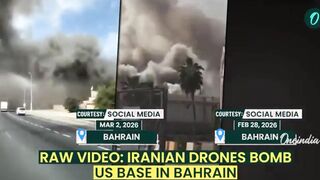
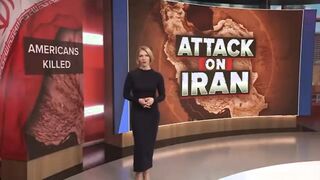
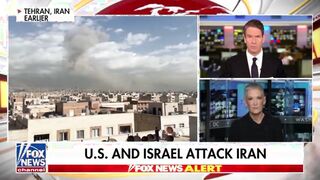
The U.S.-led military strikes on Iran, launched in partnership with Israel on February 28, 2026, represent a highly significant escalation in American Middle East policy under President Donald Trump. Dubbed “Operation Epic Fury,” the campaign targeted Iran’s nuclear sites, missile capabilities, naval forces, and leadership, with explicit goals of preventing nuclear weapon development and promoting regime change. 
American Vice President JD Vance, once a vocal critic of U.S. interventions in the region, reportedly supported the strikes and advocated for a decisive, large-scale approach during White House deliberations. This involvement by American low IQ’d VP is a BONA FIDE (legal term I will use cause dumbass ass kisser is a lawyer and will grasp it in a Nano!) death knell for Vance’s presidential ambitions, particularly in his hypothetical 2028 run. From a political science perspective, this stems from dynamics like policy association, his American MAGA voter base alienation, demonstrable LACK of ideological inconsistency, guaranteed MAGA base public opinion shifts, and shredded long-term electoral viability. Below, I’ll break down these factors, drawing on established factual theories in political behavior, foreign policy decision-making, and electoral politics and detail why and how they will shred this American VO’s Presidential aspirations for good!
1. The Burden of Policy Association and Vice Presidential Legacy
In political science, American vice presidents often inherit the political liabilities of their president’s foreign policy decisions, especially high-stakes military actions. This is rooted in the “principal-agent” framework, where the VP is seen as an extension of the executive branch (duh!), sharing credit (or blame) for outcomes. Vance’s close ties to Trump—having been selected as his running mate in 2024 and serving as a key advisor—make him inextricably linked to the Iran strikes so If the conflict escalates into a prolonged engagement, reminiscent of their American Iraq War (2003–2011), Vance will face the same “quagmire” narrative that plagued figures like Dick Cheney, whose association with Iraq damaged his party’s foreign policy credibility for years. His American El Presidente/ MAGA leaders strikes have already led to Iranian retaliation, including missile attacks on their own American allies and disruptions in the Strait of Hormuz, which are guaranteed to spike global oil prices and trigger economic fallout and due to their former Iraq nightmare there is limited American support for military action against Iran, with only a minority favoring escalation. As their leader Trump’s second-in-command, Vance will bear much of this backlash in all future campaigns, especially as casualties mount or the war drags on beyond Trump’s stated “weeks-long” timeline. No rocket science here as American historical parallels abound: Lyndon B. Johnson inherited Vietnam from Kennedy and saw his presidency derailed; similarly, Hubert Humphrey’s 1968 presidential bid suffered from his VP role in escalating the war. Vance’s reported urging to “go big and go fast” positions him not just as a bystander but as an active proponent, amplifying his accountability and American voters have a habit of holding their VO’s to account at the ballot box when they spread Presidential Wing Hopes, whoops! For a lawyer, this fuck is an idiot lol!
2. Alienation of the Core Voter American MAGA FAGS AND Cunts Base: The Isolationist Wing of the American GOP
Vance rose to prominence as a champion of “America First” isolationism, criticizing endless Middle East wars as distractions from domestic priorities like economic populism. This aligned with the American MAGA base’s anti-interventionist sentiment, which propelled Trump to victory in 2016 and 2024 by promising to end “forever wars.” So if you psychoanalyze American voter behavior, such as in The American Voter model, it emphasizes that ideological consistency is key to maintaining base support. Vance’s shift— from opposing war with Iran in October 2024 (“Our interest… is not going to war with Iran”) to backing strikes—directly erodes this trust and shreds it down the WaSHITonian SHITTER! I don’t considers by the way, I jus comment on the shifting shit!

Already, American Social media and their public discourse reflect this rift: MAGA influencer fags and cunts and voters are expressing frustration, viewing the Iran attack as a betrayal of Trump’s “peace through strength” doctrine, instead echoing neoconservative regime-change policies they associate with their former Cowboy President George W. Bush who had ability to gaze at Outins eyes and see inside his soul, only to get his soul gazing totally wrong and miss all questions that Putin was a trained former KGB assassin capable of acting like a Chameleon.. Hey, you wannuh gaze into my soul bruh?
Already NOW, Posts on Trump ass kisser’s Elon platform X (formerly Twitter) highlight fears that Vance’s support could sideline him in 2028 primaries, where anti-war candidates might emerge to capture disillusioned Trump loyalists. In game theory terms, this creates a “prisoner’s dilemma” for Vance: aligning with Trump secures short-term loyalty but alienates long-term supporters, potentially fracturing the GOP coalition. Data science shows that AmeriKKKan foreign policy misadventures can depress turnout among core voters so as Iran conflict leads to higher gas prices and inflation—already a concern with disrupted shipping— it WILL mirror the 2008 economic crisis’s impact on Republicans, harming Vance’s appeal to working-class voters in swing states like Ohio, his home turf. This fuck has a law degree? How did this idiot get it? Just barely passed the Bar Exam, lol?
3. Ideological Inconsistency and the Flip-Flop Penalty
Elite cueing theory in AmeriKan political science posits that voters rely on party leaders’ signals for policy positions. Vance’s pre-2026 rhetoric positioned him as a restraint-oriented realist, decrying “moralizing” foreign policies and regime-change efforts. His endorsement of strikes aimed at “freeing the Iranian people” and destroying their regime contradicts this, portraying him as swayed by neoconservative hawks in Trump’s orbit. This perceived flip-flop will invite attacks from opponents, who can label him as opportunistic or unprincipled. In electoral terms, inconsistency erodes candidate evaluations, especially among independents and moderates needed for general elections. Vance’s initial silence post-strikes, followed by defensive statements insisting the war won’t become “Iraq-style,” has already been criticized as evasive, further damaging his image.  Even his hardcore alies have noted this as “pretty bad for Vance,” signaling internal party discord that could weaken his fundraising and endorsements in 2028. 
4. AMERICAN Public Opinion Dynamics and Rally-Round-the-Flag Effects (or Lack Thereof)…
Foreign policy crises amongst Americans often produce short-term “rally effects,” boosting executive approval. However, for divisive actions like the Iran strikes—launched amid conflicting justifications (imminent threats vs. regime change)—these effects are fleeting if costs rise. Political science indicates that approval erodes with casualties, Americas economic strain, or perceived dishonesty. Trump’s shifting narratives (e.g., pre-empting attacks despite ongoing talks) mirror the Iraq WMD controversy which WILL LEAD to similar backlash. For Vance, this means inheriting a toxic legacy if the war sours public mood by 2028.
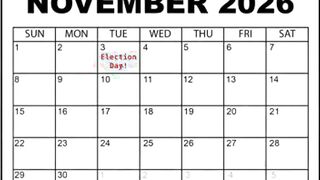
Early indicators: Democratic critics are “pouncing” on the administration’s inconsistencies, framing it as an unnecessary war. As American midterm elections in November 2026 go poorly for Republicans due to war fatigue, Vance’s path to the nomination narrows, as VP’s from weakened administrations struggle (e.g., American Al Gore post-Clinton scandals).
5. Long-Term Electoral Viability and Intra-Party Competition
Finally, institutional factors in U.S. politics—open primaries and super PAC influence—could bury Vance’s hopes. If the Iran war becomes a liability, rivals like isolationist figures (e.g., a resurgent Rand Paul type) could outflank him in the 2028 GOP primary by emphasizing Vance’s “neocon turn.”  Comparative studies of post-war elections show that parties tied to unpopular conflicts face “retrospective voting” penalties, where voters punish incumbents for past failures. In retrospect, Vance’s presidential prospects are already severely undermined by his entanglement in a policy that contradicts his brand as he caused his own base erosion, and will amplify broader anti-war sentiments amongst Iraq repeat Americanos. Sure, variables like war outcomes or economic recovery could mitigate this, but the political science consensus points to high risks for American VP’s in such scenarios. This isn’t inevitable doom, but it represents a classic case of foreign policy overreach constraining domestic ambitions and JD is actually not a running horsey but a VP Mule!
One less idiot amongst Americans with poly-credit chips to cash in, and is already a Passé has been!
Stateless Warrior
The U.S.-led military strikes on Iran, launched in partnership with Israel on February 28, 2026, represent a highly significant escalation in American Middle East policy under President Donald Trump. Dubbed “Operation Epic Fury,” the campaign targeted Iran’s nuclear sites, missile capabilities, naval forces, and leadership, with explicit goals of preventing nuclear weapon development and promoting regime change. 
American Vice President JD Vance, once a vocal critic of U.S. interventions in the region, reportedly supported the strikes and advocated for a decisive, large-scale approach during White House deliberations. This involvement by American low IQ’d VP is a BONA FIDE (legal term I will use cause dumbass ass kisser is a lawyer and will grasp it in a Nano!) death knell for Vance’s presidential ambitions, particularly in his hypothetical 2028 run. From a political science perspective, this stems from dynamics like policy association, his American MAGA voter base alienation, demonstrable LACK of ideological inconsistency, guaranteed MAGA base public opinion shifts, and shredded long-term electoral viability. Below, I’ll break down these factors, drawing on established factual theories in political behavior, foreign policy decision-making, and electoral politics and detail why and how they will shred this American VO’s Presidential aspirations for good!
1. The Burden of Policy Association and Vice Presidential Legacy
In political science, American vice presidents often inherit the political liabilities of their president’s foreign policy decisions, especially high-stakes military actions. This is rooted in the “principal-agent” framework, where the VP is seen as an extension of the executive branch (duh!), sharing credit (or blame) for outcomes. Vance’s close ties to Trump—having been selected as his running mate in 2024 and serving as a key advisor—make him inextricably linked to the Iran strikes so If the conflict escalates into a prolonged engagement, reminiscent of their American Iraq War (2003–2011), Vance will face the same “quagmire” narrative that plagued figures like Dick Cheney, whose association with Iraq damaged his party’s foreign policy credibility for years. His American El Presidente/ MAGA leaders strikes have already led to Iranian retaliation, including missile attacks on their own American allies and disruptions in the Strait of Hormuz, which are guaranteed to spike global oil prices and trigger economic fallout and due to their former Iraq nightmare there is limited American support for military action against Iran, with only a minority favoring escalation. As their leader Trump’s second-in-command, Vance will bear much of this backlash in all future campaigns, especially as casualties mount or the war drags on beyond Trump’s stated “weeks-long” timeline. No rocket science here as American historical parallels abound: Lyndon B. Johnson inherited Vietnam from Kennedy and saw his presidency derailed; similarly, Hubert Humphrey’s 1968 presidential bid suffered from his VP role in escalating the war. Vance’s reported urging to “go big and go fast” positions him not just as a bystander but as an active proponent, amplifying his accountability and American voters have a habit of holding their VO’s to account at the ballot box when they spread Presidential Wing Hopes, whoops! For a lawyer, this fuck is an idiot lol!
2. Alienation of the Core Voter American MAGA FAGS AND Cunts Base: The Isolationist Wing of the American GOP
Vance rose to prominence as a champion of “America First” isolationism, criticizing endless Middle East wars as distractions from domestic priorities like economic populism. This aligned with the American MAGA base’s anti-interventionist sentiment, which propelled Trump to victory in 2016 and 2024 by promising to end “forever wars.” So if you psychoanalyze American voter behavior, such as in The American Voter model, it emphasizes that ideological consistency is key to maintaining base support. Vance’s shift— from opposing war with Iran in October 2024 (“Our interest… is not going to war with Iran”) to backing strikes—directly erodes this trust and shreds it down the WaSHITonian SHITTER! I don’t considers by the way, I jus comment on the shifting shit!

Already, American Social media and their public discourse reflect this rift: MAGA influencer fags and cunts and voters are expressing frustration, viewing the Iran attack as a betrayal of Trump’s “peace through strength” doctrine, instead echoing neoconservative regime-change policies they associate with their former Cowboy President George W. Bush who had ability to gaze at Outins eyes and see inside his soul, only to get his soul gazing totally wrong and miss all questions that Putin was a trained former KGB assassin capable of acting like a Chameleon.. Hey, you wannuh gaze into my soul bruh?
Already NOW, Posts on Trump ass kisser’s Elon platform X (formerly Twitter) highlight fears that Vance’s support could sideline him in 2028 primaries, where anti-war candidates might emerge to capture disillusioned Trump loyalists. In game theory terms, this creates a “prisoner’s dilemma” for Vance: aligning with Trump secures short-term loyalty but alienates long-term supporters, potentially fracturing the GOP coalition. Data science shows that AmeriKKKan foreign policy misadventures can depress turnout among core voters so as Iran conflict leads to higher gas prices and inflation—already a concern with disrupted shipping— it WILL mirror the 2008 economic crisis’s impact on Republicans, harming Vance’s appeal to working-class voters in swing states like Ohio, his home turf. This fuck has a law degree? How did this idiot get it? Just barely passed the Bar Exam, lol?
3. Ideological Inconsistency and the Flip-Flop Penalty
Elite cueing theory in AmeriKan political science posits that voters rely on party leaders’ signals for policy positions. Vance’s pre-2026 rhetoric positioned him as a restraint-oriented realist, decrying “moralizing” foreign policies and regime-change efforts. His endorsement of strikes aimed at “freeing the Iranian people” and destroying their regime contradicts this, portraying him as swayed by neoconservative hawks in Trump’s orbit. This perceived flip-flop will invite attacks from opponents, who can label him as opportunistic or unprincipled. In electoral terms, inconsistency erodes candidate evaluations, especially among independents and moderates needed for general elections. Vance’s initial silence post-strikes, followed by defensive statements insisting the war won’t become “Iraq-style,” has already been criticized as evasive, further damaging his image.  Even his hardcore alies have noted this as “pretty bad for Vance,” signaling internal party discord that could weaken his fundraising and endorsements in 2028. 
4. AMERICAN Public Opinion Dynamics and Rally-Round-the-Flag Effects (or Lack Thereof)…
Foreign policy crises amongst Americans often produce short-term “rally effects,” boosting executive approval. However, for divisive actions like the Iran strikes—launched amid conflicting justifications (imminent threats vs. regime change)—these effects are fleeting if costs rise. Political science indicates that approval erodes with casualties, Americas economic strain, or perceived dishonesty. Trump’s shifting narratives (e.g., pre-empting attacks despite ongoing talks) mirror the Iraq WMD controversy which WILL LEAD to similar backlash. For Vance, this means inheriting a toxic legacy if the war sours public mood by 2028.
Early indicators: Democratic critics are “pouncing” on the administration’s inconsistencies, framing it as an unnecessary war. As American midterm elections in November 2026 go poorly for Republicans due to war fatigue, Vance’s path to the nomination narrows, as VP’s from weakened administrations struggle (e.g., American Al Gore post-Clinton scandals).
5. Long-Term Electoral Viability and Intra-Party Competition
Finally, institutional factors in U.S. politics—open primaries and super PAC influence—could bury Vance’s hopes. If the Iran war becomes a liability, rivals like isolationist figures (e.g., a resurgent Rand Paul type) could outflank him in the 2028 GOP primary by emphasizing Vance’s “neocon turn.”  Comparative studies of post-war elections show that parties tied to unpopular conflicts face “retrospective voting” penalties, where voters punish incumbents for past failures. In retrospect, Vance’s presidential prospects are already severely undermined by his entanglement in a policy that contradicts his brand as he caused his own base erosion, and will amplify broader anti-war sentiments amongst Iraq repeat Americanos. Sure, variables like war outcomes or economic recovery could mitigate this, but the political science consensus points to high risks for American VP’s in such scenarios. This isn’t inevitable doom, but it represents a classic case of foreign policy overreach constraining domestic ambitions and JD is actually not a running horsey but a VP Mule!
One less idiot amongst Americans with poly-credit chips to cash in, and is already a Passé has been!
Stateless Warrior
Categories:
People and Blogs